
Table of Contents
EV Charging Station for Home: 2026 Ultimate Indian Installation Guide
The Indian electric vehicle (EV) ecosystem is experiencing a monumental transformation. As battery technology improves and electric cars become mainstream, the core of the charging infrastructure is shifting from public highways to private residential spaces. While public DC fast chargers are crucial for long-distance travel, day-to-day EV ownership relies heavily on having a reliable EV charging station for home.
Charging your vehicle overnight where it spends the most time is the most efficient and cost-effective approach to e-mobility. It transforms your daily routine: instead of taking time out to visit a public fueling station, you simply plug in your car at night and wake up to a fully charged battery every morning.
Setting up a safe, legal, and high-performance domestic EV charging station requires navigating various technical, regulatory, and infrastructural details. From assessing single-phase versus three-phase grid allocations to dealing with Resident Welfare Association (RWA) approvals and ensuring proper electrical grounding, this guide provides the detailed roadmap needed to build a future-proof home charging system.
2. Grid Architecture & DISCOM Frameworks
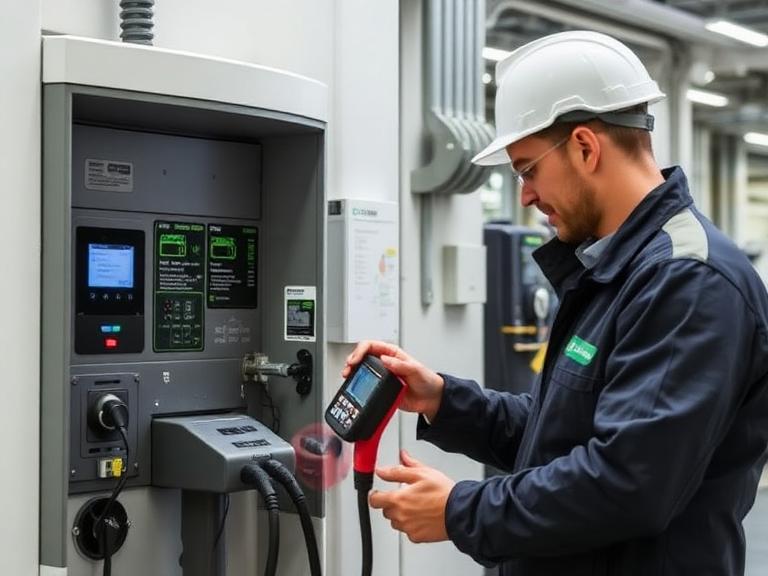
Setting up a home EV charger requires a solid understanding of the domestic electrical grid and how power is distributed in India. Your home’s incoming electrical supply determines the type of charger you can install and how quickly it will charge your vehicle.
Single-Phase vs. Three-Phase Power Allocations
Most standard independent houses and older apartment buildings operate on a 230V Single-Phase AC distribution line. This configuration is well-suited for standard household appliances and can support entry-level portable chargers or wallboxes that draw up to 3.3 kW or 7.4 kW of continuous power.
Conversely, premium villas, row houses, and modern high-rise gated communities are typically built with a 400V Three-Phase AC electrical supply. This system splits the electrical load across three distinct active phases, allowing you to install heavy-duty residential charging systems that deliver between 11 kW and 22 kW of alternating current without destabilizing your home’s main electrical panel.
Sanctioned Load Management & Load Upgrades
Every residential grid connection in India is allocated a specific Sanctioned Load (measured in kilowatts), which is detailed on your monthly electricity bill. This represents the maximum total power your home is legally permitted to draw from the local distribution company (DISCOM) at any single moment.
If your current sanctioned load is 5 kW and you connect a high-draw 7.4 kW Level 2 wallbox charger alongside other major appliances like air conditioners, water geysers, and induction cooktops, the total power demand will instantly exceed your legal limits. This can trip the main circuit breaker and potentially damage the neighborhood distribution transformer.
[Total Household Baseload] + [EV Charger kW Rating] must be ≤ [Sanctioned Load Allotment]
Before purchasing hardware, check your home’s baseline peak power draw. If adding the EV charging station pushes your total usage past your sanctioned allotment, you must apply for a Load Enhancement via your local DISCOM’s online customer portal or app. This process usually involves paying a small processing fee per additional kilowatt and upgrading the main incoming service cable to handle the higher current.
3. Hardware Tiers & Indian EV Charging Speeds
EV charging equipment is categorized into distinct tiers based on power output, safety profiles, and connector types. Choosing the right tier ensures your charging setup matches your vehicle’s capabilities without incurring unnecessary hardware or installation costs.
Level 1: Basic Portable Chargers (3.3 kW to 3.6 kW)
Level 1 charging relies on the portable AC charging cables provided by most vehicle manufacturers. These devices plug directly into standard industrial 16A three-pin domestic sockets wired to a dedicated circuit breaker.
- Technical Characteristics: Delivers a modest 3.3 kW to 3.6 kW of power at 15A to 16A current draw.
- Charging Time: It typically takes 10 to 14 hours to fully charge a mid-sized 40 kWh electric car battery.
- Best Suited For: Electric two-wheelers, plug-in hybrid vehicles, or drivers with short daily commutes who have long parking windows overnight.
Level 2: High-Speed Dedicated Smart Wallboxes (7.4 kW to 22 kW)
Level 2 units are the standard for dedicated residential charging systems. These wall-mounted chargers feature advanced internal circuit boards, built-in safety relays, and tethered cables that use universal Type 2 AC connector plugs.
- 7.4 kW Wallbox (Single-Phase / 32A Input): This is the most popular choice for urban Indian homes. It provides the maximum power delivery possible on a single-phase residential connection, charging a standard 40 kWh electric SUV from 10% to 100% in 5 to 6 hours.
- 11 kW to 22 kW Wallbox (Three-Phase / 16A–32A per Phase): These high-capacity units can charge compatible vehicles in 2 to 4 hours. They are ideal for households with multiple EVs or premium electric vehicles with high-capacity onboard AC chargers.
4. Hardware Selection Matrix for Residential EV Installations
| Charger Category & Output Rating | Mandatory Electrical Supply | Required Breaker & Cable Sizes | Primary Vehicle Applications | Estimated Time (40 kWh Battery Pack) |
| Industrial Smart Socket (3.3 kW – 3.6 kW) | 230V Single-Phase Line, Dedicated 16A Supply | 16A Type-C MCB, 4 mm² Copper Cable | Electric scooters, bikes, entry-level commuter EVs | 11 – 13 Hours |
| Standard Smart Wallbox (7.4 kW) | 230V Single-Phase Line, Dedicated 32A Supply | 40A Type-C MCB, 6 mm² Copper Cable | Modern electric hatchbacks, sedans, and family SUVs | 5 – 6 Hours |
| Premium High-Output Wallbox (11 kW) | 400V Three-Phase Grid, 16A Draw per Phase | 3×20A Triple-Pole MCB, 4 mm² 4-Core Armored Cable | Premium electric vehicles, luxury long-range cars | 3.5 – 4 Hours |
| Ultra-High Output Wallbox (22 kW) | 400V Three-Phase Grid, 32A Draw per Phase | 3×40A Triple-Pole MCB, 6 mm² 4-Core Armored Cable | Multi-EV garages, luxury imports supporting 22kW AC | 2 Hours |
5. Critical Electrical Safety Protocols & Grounding Standards
EV charging involves a high-amperage current drawing continuously for several hours. Standard household wiring is not designed for this type of sustained thermal load. Proper safety protocols must be followed to prevent electrical faults, equipment damage, or personal injury.
The Need for Dedicated Chemical Earthing
Standard household earthing networks are often shared across multiple appliances and can degrade over time. A dedicated EV charging circuit requires an independent, high-grade chemical earthing pit to ensure safety.
Installers use specialized copper-bonded steel electrodes surrounded by a highly conductive, moisture-retaining chemical bentonite or carbonaceous compound. This setup keeps the electrical resistance of the grounding line consistently below 5 Ohms, and the neutral-to-earth voltage drop below 2V AC. If an insulation failure occurs within the vehicle’s internal electronics, the dedicated earth path safely routes the high current away from the car’s metallic body, preventing severe shock hazards.
Core Protective Components Inside the Subpanel
Every residential charging installation must include a dedicated, weatherproof distribution box positioned between the main energy meter and the charger unit. This enclosure must contain:
- Miniature Circuit Breaker (MCB): Must be rated at 125% of the charger’s maximum operating current (for example, a 40A Type-C MCB for a 32A 7.4 kW charger) to protect the wiring from sustained thermal overloads.
- Residual Current Circuit Breaker with Overcurrent Protection (RCBO): A dedicated 30mA Type-A or Type-B device that detects microscopic current leaks to the ground, instantly cutting off power to prevent electrical shock.
- Surge Protection Device (SPD): Protects the sensitive electronic control boards inside the charger and the vehicle from transient voltage spikes caused by lightning strikes or grid instability.
6. Technical Installation Challenges in Apartments & Housing Societies
While installing a charger in an independent house is relatively simple, setting up charging infrastructure in shared apartment buildings and gated communities involves several logistical and technical challenges.
Navigating Resident Welfare Association (RWA) Approvals
To install a private charging station in an assigned basement or stilt parking space, you must secure a formal No Objection Certificate (NOC) from your community’s Resident Welfare Association (RWA) or estate management board. RWAs often express concerns regarding transformer overloading, structural modifications, and fire safety.
To streamline the approval process, point out the Central Ministry of Power’s consolidated guidelines, which explicitly state that private residents have a right to charge their vehicles using their existing domestic connections. In addition, India’s Model Building Bye-Laws mandate that new residential complexes must design 20% of their total parking capacity to be EV-ready. Providing the RWA with official technical specifications, safety certifications, and a clear installation plan helps address common concerns and build trust.
Long Conduit Cable Runs & Voltage Drop Calculations
In high-rise apartment complexes, the distance from your assigned billing meter in the ground-floor vault to your specific parking spot can often exceed 60 to 100 meters. Routing heavy lines across this distance requires running armored copper or aluminum cabling along overhead cable trays spanning the garage ceiling.
Engineers must calculate the structural wire size carefully to minimize Voltage Drop over the long distance. If the line is undersized, resistance increases, causing energy loss as heat and dropping the voltage at the charger below acceptable limits. To prevent this, installers step up the cable diameter—for example, upgrading from a standard 6 mm² line to a thicker 10 mm² copper cable for long runs—ensuring stable, efficient power delivery.
7. Smart Charging Features, Software, & Inverter Integration
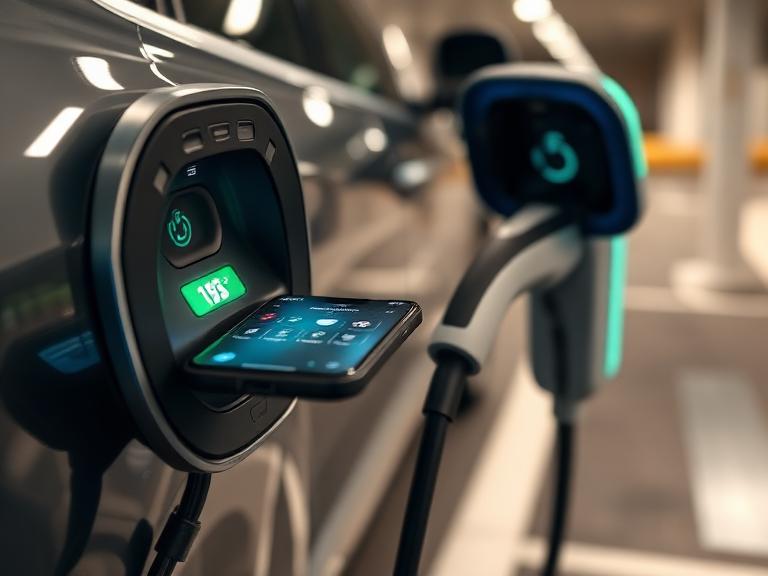
Modern home EV chargers are intelligent, internet-connected appliances that help maximize grid efficiency, lower charging costs, and integrate with residential renewable energy systems.
Mobile Application Controls & Grid Optimization
Equipped with built-in Wi-Fi, Bluetooth, or cellular SIM cards, smart home chargers pair directly with dedicated mobile apps. These tools let homeowners monitor ongoing energy usage, view historical charging statistics, and schedule sessions during off-peak hours (typically between 11 PM and 6 AM). This helps reduce the peak load on the local grid infrastructure and protects household electrical panels from stress.
Dynamic Load Balancing (DLB)
Advanced home wallboxes feature dynamic load balancing using external Current Transformer (CT) clamps attached to the home’s main incoming electrical panel. The charger constantly monitors the real-time energy use of the entire house.
If major household appliances like central AC units or water heaters turn on simultaneously, the smart wallbox automatically scales back its own power draw. Once those household appliances cycle off, the charger ramps back up to its maximum capacity, protecting your main circuit breaker from tripping.
[Available Capacity] = [Main Sanctioned Load] - [Live House Consumption]
Smart Charger adjusts its output in real time to match the Available Capacity.
Residential Rooftop Solar Integration
With solar rooftop installations growing across Indian residential areas, modern smart chargers feature dedicated eco-charging modes. The charger communicates directly with your solar inverter to calculate real-time generation surplus that would otherwise flow back to the utility grid. The wallbox then matches its charging output exactly to this surplus, allowing you to charge your vehicle using 100% clean, locally generated solar energy.
8. Financial Roadmap: Hardware Procurement, Installation, & Tariffs
Planning a budget for a home EV charging project requires breaking down equipment procurement, material logistics, labor, and ongoing utility costs.
Upfront Capital Expenditure Breakdown
- Equipment Sourcing: Entry-level industrial smart sockets cost between ₹5,000 and ₹12,000. Standard 7.4 kW smart wallboxes from reputable manufacturers range from ₹30,000 to ₹45,000, while premium three-phase commercial-grade units cost up to ₹75,000.
- Cabling and Conduit Layouts: Heavy-duty armored copper cabling costs roughly ₹180 to ₹400 per meter depending on the wire gauge. Weatherproof DB boxes, PVC piping, and structural mounting hardware add around ₹3,000 to ₹6,000.
- Engineering and Labor Costs: Dedicated chemical earthing pit installation, structural drilling, electrical connections, and final system certification typically range between ₹5,000 and ₹12,000 depending on the complexity of the site layout.
Operating Costs & Residential EV Slabs
Charging your vehicle at home is highly cost-effective compared to internal combustion engines. Under regular domestic billing systems in most Indian states, power costs range from ₹5.50 to ₹9.50 per unit (kWh) based on your monthly household usage tier. Several progressive states now offer dedicated EV utility meters with flat tariffs as low as ₹4.50 to ₹6.50 per unit.
Charging a typical 40 kWh battery pack costs between ₹200 and ₹380 for a full charge, giving you a real-world driving range of roughly 280 kilometers. This translates to a low operational cost of approximately ₹1.00 to ₹1.35 per kilometer, providing substantial long-term savings for daily commuting.
9. Step-by-Step Deployment Protocol for Homeowners
1.Site Assessment & Load Verification:Phase 1.
Inspect your parking space’s location relative to your main energy meter. Check your monthly utility bill to verify your current sanctioned load capacity, and determine if an upgrade is required before proceeding.
2.Securing RWA Permissions & Documentation:Phase 2.
Submit a formal written application to your property’s management board or RWA. Include the technical specifications of your charger, safety certifications, and a detailed cable routing diagram to obtain your formal NOC.
3.Hardware Selection & Sourcing:Phase 3.
Select a high-quality, BIS-certified charging unit that matches your vehicle’s internal AC charging capacity. Ensure the hardware features an appropriate ingress protection rating (such as IP65 or IP66) if it will be exposed to outdoor weather.
4.Civil Boring & Chemical Earthing Setup:Phase 4.
Drill a dedicated grounding pit near your building’s primary earth array. Install a copper-bonded steel electrode surrounded by highly conductive chemical grounding compound, and verify that the earth line’s resistance measures below 5 Ohms.
5.Conduit Routing & Protection Panel Assembly:Phase 5.
Mount a lockable, weatherproof distribution box near your parking space. Route high-gauge armored copper cabling inside flame-retardant conduits from the billing meter to the box, and install the necessary MCB, RCBO, and SPD safety components.
6.Wallbox Mounting & Final Commissioning:Phase 6.
Secure the charger housing to the wall or a dedicated metal pedestal column. Connect the incoming power lines, activate the main circuit breakers, pair the device with your local Wi-Fi network, and test the system with a vehicle to ensure stable power delivery.
10. Conclusion: Future-Proofing Your Home Infrastructure
Setting up a dedicated EV charging station for home is a practical upgrade that enhances both your daily driving convenience and the long-term value of your property. By choosing quality hardware, establishing reliable electrical protections, and configuring smart scheduling features, you create a robust charging system that will serve your household for years to come.
As India’s clean energy transition moves forward, having a dedicated home charging station puts you ahead of the curve. It ensures you enjoy the full economic and environmental benefits of driving electric, offering a smarter, more sustainable way to power your everyday journeys.