
Table of Contents
AC EV Charger Maintenance Hyderabad | Wallbox Repair & Servicing
Alternating Current (AC) wallboxes and commercial charging pedestals are the primary lifelines for overnight residential power replenishment and workplace charging across Telangana. Supporting slow-to-fast charging capabilities (ranging from 3.3 kW single-phase slow charging up to 22 kW three-phase fast AC charging), these systems manage key power conversion handshakes with an electric vehicle’s On-Board Charger (OBC).
In fast-growing metropolitan centers like Hyderabad, AC chargers are heavily relied upon across gated communities in Kondapur, Kukatpally, and Miyapur, as well as multi-story corporate parking garages in HITEC City, Gachibowli, and the Financial District. However, ambient operating environments present specific stresses: sustained summer heat exceeding 42°C in basements and open lots, extreme grid neutral shifts under heavy TSSPDCL load, and high humidity during monsoon downpours. Without a structured AC EV Charger Maintenance in Hyderabad strategy, charging infrastructure suffers from frequent RCD trips, pitted AC contactors, Control Pilot (CP) signaling errors, and melted connector pins.
┌──────────────────────────────────────────────────────────────────────────────────┐
│                    AC EVSE CRITICAL FAILURE RISK PROFILE                         │
├──────────────────────────────┬───────────────────────────────────────────────────┤
│ Control Pilot (CP) Signal    │ PWM signal drift, resistor network failure,       │
│ Integrity                    │ state transition locks (State A to State C)       │
│ Thermal Pin Stress           │ Loose contact spring, high contact resistance,    │
│                              │ pin terminal melting above 80°C                   │
│ RCD/RCCB Isolation           │ Moisture ingress, smooth DC residual currents     │
│                              │ (>6mA DC) blinding Type A residual breakers      │
│ Grid Supply Voltage Swing    │ Undervoltage (<190V) or overvoltage (>265V)      │
│                              │ trips from TSSPDCL grid fluctuations              │
└──────────────────────────────┴───────────────────────────────────────────────────┘
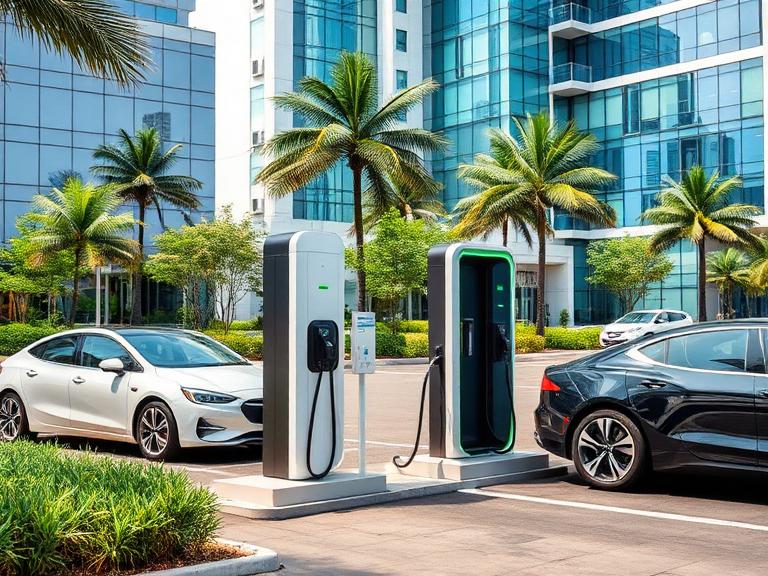
Technical Analysis: Why AC Charging Infrastructure Fails in Hyderabad
While AC wallboxes do not contain heavy rectification circuits like DC fast chargers, they function as high-current safety gates. Operating 32-Amp or 16-Amp continuous electrical loads for 6 to 8 hours straight causes unique thermal and mechanical degradation:
1. Thermal Degradation of Contactors & Terminal Blocks
Continuous current flow through AC contactors causes resistive heating at connection points. Over time, thermal cycling expands and contracts screw terminals, leading to loose connections, high resistance, and burnt terminal blocks inside the charger enclosure.
2. Failure of Control Pilot (CP) & Proximity Pilot (PP) Lines
The Control Pilot (CP) uses a 1 kHz Pulse Width Modulation (PWM) signal to communicate available current capacity to the vehicle EVSE. Corroded pins, faulty communication capacitors, or damaged cable retractor springs corrupt this signal. As a result, the charger remains locked in State A (Standby) or State B (Vehicle Connected) without transitioning to State C (Charging).
3. Residual Current Device (RCD) Blinding & Nuisance Trips
Under standard Indian grid configurations, neutral-to-earth voltage swings are common. Combined with high humidity during Hyderabad monsoons, tiny leakage currents develop. If an AC wallbox relies on an outdated Type A RCD without proper 6mA Smooth DC leakage detection (Type B or RDC-DD compliant), the protection mechanism can become “blinded” or trip repeatedly, cutting off overnight charging sessions.
4. Overvoltage & Undervoltage Grid Instability
Peak evening grid demands in dense residential zones (e.g., LB Nagar, Uppal, Chandanagar) cause voltage drops below 190V. Conversely, sudden off-peak load shedding can send voltage spikes above 265V. Without active voltage monitoring and protective calibration, internal metal-oxide varistors (MOVs) and controller power supply units burn out.
Scope of Comprehensive AC EV Charger Servicing
Our certified field engineers perform structured multi-point maintenance procedures tailored for single-phase (3.3 kW / 7.4 kW) and three-phase (11 kW / 22 kW) AC charging hardware:
┌──────────────────────────────────────────────────────────────────────────────────┐
│                   AC EV CHARGER PREVENTIVE AUDIT WORKFLOW                       │
├──────────────────────────────────────────────────────────────────────────────────┤
│ [1] VISUAL & MECHANICAL OVERHAUL                                                 │
│     ├── Check IP54/IP65 enclosure gaskets and weather seals                      │
│     ├── Inspect Type 2 socket/plug pins for oxidation or arc pitting             │
│     └── Verify cable retractor tension and strain relief bushings                │
│                                                                                  │
│ [2] ELECTRICAL SAFETY & ISOLATION TESTING                                        │
│     ├── Perform 500V DC Insulation Resistance (IR) Megger Test (>10MΩ)           │
│     ├── Measure Earth Loop Impedance and ground pit resistance (<5Ω)             │
│     └── Test RCD/RCBO trip speed at 30mA AC and 6mA DC current thresholds          │
│                                                                                  │
│ [3] SIGNALING & LOGIC DIAGNOSTICS                                                │
│     ├── Measure CP/PP PWM frequency (1 kHz ±0.5%) and voltage levels (±12V)      │
│     ├── Test RFID authorization response times & offline local cache sync        │
│     └── Update OCPP 1.6J/2.0.1 firmware to fix OBC handshake bugs                │
│                                                                                  │
│ [4] FULL-LOAD THERMOGRAPHY & CALIBRATION                                         │
│     ├── Run 30-minute full 32A load test with a dedicated EV simulator           │
│     └── Conduct infrared thermography on AC contactors & internal terminal rails │
└──────────────────────────────────────────────────────────────────────────────────┘
Asset Classifications Covered Under Maintenance Programs
| AC Charger Category | Target Installation Sites | Primary Inspection Focus | Recommended Service Frequency |
| Single-Phase AC Wallbox (3.3kW to 7.4kW) | Gated Communities, Villas, Private Apartments | Earthing loop integrity, RCD sensitivity, input voltage stabilization checks, plug pin polishing. | Semi-Annual (2x per year) |
| Three-Phase Dual-Gun Pedestal (11kW to 22kW) | Corporate IT Parks, Malls, Hotel Parking Lots | Dynamic load balancing checks, RFID authorization, contactor wear, OCPP network sync. | Quarterly (4x per year) |
| Captive Fleet AC Stations (7.4kW to 22kW) | Commercial Fleet Hubs, Delivery Depots | Heavy-duty contactor lifespan audits, socket spring replacement, cable strain testing. | Monthly or Bi-Monthly |
| Public Destination Chargers (7.4kW to 22kW) | Highway Restaurants, Metro Station Parking | Vandalism seal audits, payment gateway validation, IP weatherproofing checks. | Bi-Monthly |
Tiered AC EV Charger Maintenance Plans in Hyderabad
We provide flexible Service Level Agreements (SLAs) tailored for individual EV owners, residential welfare associations (RWAs), commercial parking managers, and enterprise fleet operators:
1. Essential Care Plan (Residential & RWA Focus)
- Target: Gated community wallboxes, apartment shared bays, individual EV owners.
- SLA Response Time: Within 24 hours.
- Deliverables: 2 Preventive Maintenance visits per year, annual earth pit testing, emergency breakdown visits at fixed discounted labor rates, and remote phone assistance.
2. Commercial Fleet & Facility Plan (Business Focus)
- Target: Office parks in HITEC City/Gachibowli, shopping malls, hotel fleets.
- SLA Response Time: Within 8 hours.
- Deliverables: 4 Preventive Maintenance visits per year, 24/7 remote CMS status monitoring, free replacement of consumable electrical spares (SPDs, internal relays, switches), and monthly uptime reporting.
3. Enterprise Operations SLA (Critical Fleet Focus)
- Target: Commercial delivery fleets, taxi hubs, high-turnover public parking.
- SLA Response Time: Within 2 to 4 hours (24/7 coverage).
- Deliverables: Monthly site visits, full-risk spare replacement coverage (including control boards, contactors, display screens, and Type 2 charging cables), dedicated account manager, and guaranteed 99% uptime SLA.
Service Coverage Across Hyderabad Metropolitan Region
Our certified mobile field engineering units operate across all key regions within Hyderabad and surrounding commercial corridors:
- IT & Financial Hubs: HITEC City, Gachibowli, Kondapur, Madhapur, Financial District, Nanakramguda, Raidurg, Kokapet.
- Residential & Expansion Belts: Kukatpally, Miyapur, Chandanagar, Bachupally, Nizampet, Kompally, LB Nagar, Uppal, Dilsukhnagar, Attapur.
- Central Business District: Banjara Hills, Jubilee Hills, Begumpet, Somajiguda, Secunderabad, Abids, Himayatnagar.
- Industrial & Logistics Zones: Jeedimetla, Balanagar, Cherlapally, Patancheru, Kattedan, Auto Nagar, Shamshabad Airport Zone.
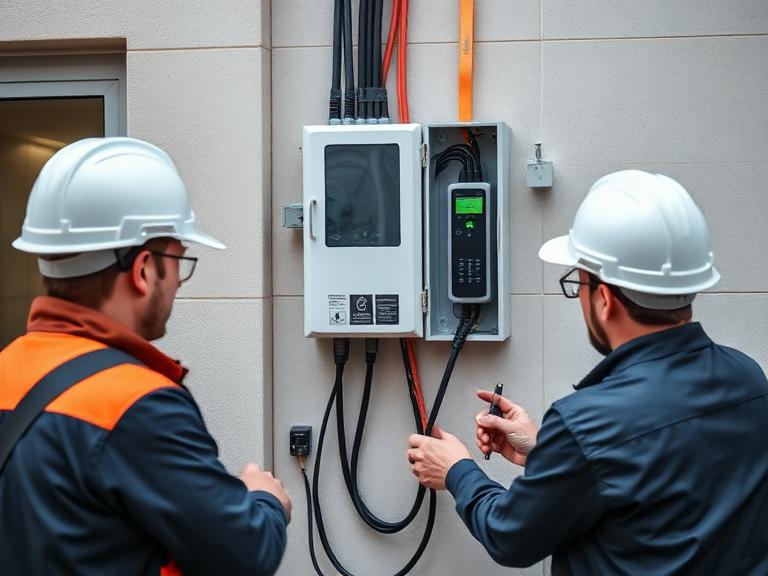
Multi-Brand AC Charger Support Capability
Our field engineers are equipped with diagnostic tools, load simulators, and genuine spare parts for major domestic and international AC EVSE brands:
- OEM & Aftermarket Brands: Exicom, Delta Electronics, ABB, Schneider Electric, Siemens, Bolt.earth, Kazam, Tata Power EZ Charge, Servotech, Relux, Lectrix, and Quench.
- Vehicle Manufacturer Bundled Wallboxes: Official home/dealer chargers for Tata Motors (Nexon/Tigor EV), MG Motor (ZSEV), Hyundai (Ioniq 5), BYD (Atto 3/Seal), Mahindra (XUV400), Kia, BMW, Mercedes-Benz, and Audi.
Frequently Asked Questions (15 FAQs)
Q1: What is included in AC EV Charger Maintenance in Hyderabad?
Answer: Comprehensive AC EV charger maintenance includes physical inspections, insulation resistance Megger testing, Earth pit loop checks, RCD safety trip testing, Control Pilot (CP/PP) signal calibration, internal contactor cleaning, firmware updates, thermal scanning under load, and emergency breakdown repairs.
Q2: Why does my home AC wallbox frequently trip the breaker during monsoons in Hyderabad?
Answer: Monsoon rains increase soil moisture, which can cause subtle earth leakage currents. If moisture enters the charger enclosure, cable connector head, or junction box, the RCD detects ground faults and trips to prevent electrical shocks. Professional maintenance restores IP weatherproofing seals and clears isolation errors.
Q3: What is the typical cost for servicing an AC EV wallbox in Hyderabad?
Answer: A standalone preventive maintenance audit or doorstep diagnostic visit for a home wallbox ranges between ₹500 and ₹1,500. Annual Maintenance Contracts (AMC) for commercial or gated community AC wallboxes range from ₹3,000 to ₹7,500 per unit per year depending on SLA speed and spare coverage.
Q4: How fast can an engineer arrive if my commercial AC charger stops working?
Answer: Under our Commercial and Enterprise SLAs, certified field engineers arrive on-site within 2 to 8 hours anywhere in Hyderabad. Standard home service requests are attended to within 24 hours.
Q5: Can poor earthing damage my EV’s On-Board Charger (OBC)?
Answer: Yes. High earth loop impedance or neutral-to-earth voltage shifts above 5V can cause the EV’s safety logic to reject charging. Persistent voltage spikes through a poor earth ground can damage sensitive onboard charging electronics inside the vehicle.
Q6: Why is my 7.4 kW AC charger suddenly charging my vehicle very slowly?
Answer: Slow charging (derating) occurs when input voltage drops significantly during peak demand hours, or when the charger detects high internal temperatures due to loose connections and throttles current output to prevent an internal fire.
Q7: Are replacement charging cables and Type 2 guns available during servicing?
Answer: Yes. Field technicians carry replacement Type 2 charging cables, gun assemblies, strain relief boots, and connector lock actuators to replace damaged components on-site.
Q8: How often should an AC charger in a gated community be serviced?
Answer: Shared AC chargers in apartment complexes experience higher wear than private chargers. They should undergo preventive servicing quarterly (4 times a year) to check contactor wear, terminal tightness, and authorization logic.
Q9: What happens during a Control Pilot (CP) signal test?
Answer: The technician connects an EVSE simulator tool to the charger’s Type 2 plug to verify the 1 kHz PWM communication waveform. This ensures the charger accurately tells the car how much current it can draw and correctly responds to state commands (Unplugged, Connected, Charging, Error).
Q10: Can you service AC chargers that were installed by another vendor or OEM?
Answer: Yes. We perform maintenance and repair services on all AC EV charging hardware, regardless of the original installer or manufacturer, provided standard electrical safety standards were used during setup.
Q11: How do firmware updates help my AC charger?
Answer: Electric vehicle manufacturers frequently release software updates that alter vehicle OBC handshake timings. Updating wallbox firmware ensures compatibility with newer EV models and resolves intermittent charging dropouts.
Q12: Is thermography (infrared scanning) necessary for AC wallboxes?
Answer: Thermography under load reveals hidden hot spots caused by loose terminal screws or oxidized contactor points before they melt wire insulation or cause an electrical fire.
Q13: What should I do if my charger display shows an “Earth Leakage Fault”?
Answer: Do not attempt to reset the breaker repeatedly. Disconnect the charging gun from the car and contact a certified EV technician to test the earth pit resistance, neutral-earth voltage, and internal RCD circuit.
Q14: Do you offer corporate package maintenance for office buildings in HITEC City?
Answer: Yes. We provide multi-charger O&M packages tailored for IT parks and corporate facilities, including multi-gun load-management audits, billing backend checks, and daytime/nighttime emergency response.
Q15: How can I book an AC EV charger maintenance service in Hyderabad?
Answer: You can book a service visit by calling our customer support hotline or submitting a service request online. A local engineer will be scheduled to perform an on-site audit.