
Table of Contents
Premier EV Charging Solutions in HITEC City | Turnkey Stations & Infra
HITEC City stands as the technological engine of Hyderabad. Spanning iconic IT hubs like Cyber Towers, Mindspace Madhapur, DLF Cyber City, and Knowledge City, this commercial district accommodates over 500,000 working professionals, tech giants, and commercial establishments daily. As clean mobility accelerates across Telangana, deploying robust, high-performance EV charging solutions in HITEC City has transitioned from an eco-friendly perk to a high-ROI commercial necessity.
Whether you manage an IT park, operate a corporate fleet, lead a residential gated community, or own real estate in the West Zone, deploying future-ready EV infrastructure establishes a competitive advantage. This guide provides an end-to-end operational blueprint for setting up, managing, and monetizing EV charging stations across HITEC City.
Why HITEC City is the Strategic Epicenter for EV Infrastructure
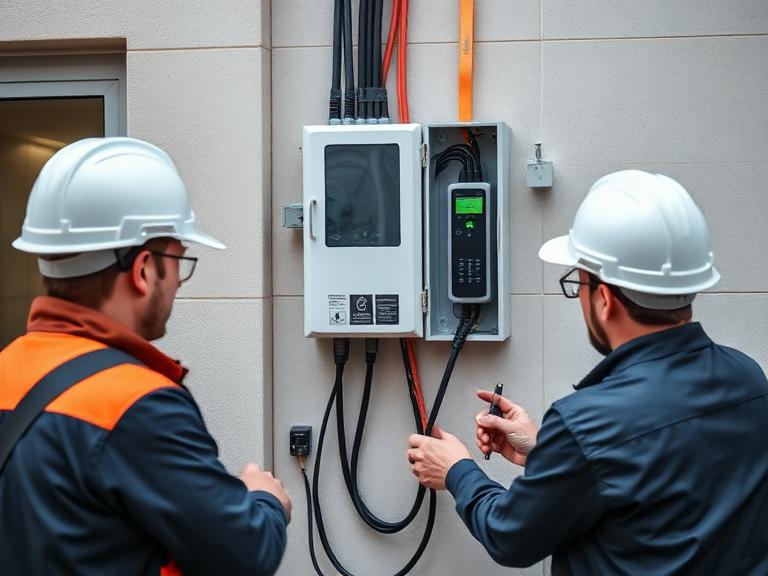
The IT corridor in Hyderabad exhibits the highest concentration of premium electric four-wheelers (such as Tata, MG, Hyundai, BYD, BMW, and Mercedes-Benz EVs) and commercial electric two-wheelers and three-wheelers across Telangana.
  +------------------------------------------------------------------+
  |              HITEC City EV Ecosystem Drivers                     |
  +------------------------------------------------------------------+
  |                                                                  |
  |  [Corporate ESG Commitments] ---> Net-Zero Commute Directives   |
  |  [High Daily Commuter Flow] ---> 500,000+ IT Professionals      |
  |  [Telangana EV Policy]      ---> Road Tax/Registration Waivers   |
  |  [TSSPDCL Grid Infrastructure] -> High-Voltage Power Capability   |
  |                                                                  |
  +------------------------------------------------------------------+
- High Daily Commuter Density: Tech campuses host thousands of parked vehicles for 8 to 10 hours daily, making them ideal environments for Level 2 AC destination charging.
- Policy Incentives: The Telangana Electric Vehicle & Energy Storage Policy provides exemptions on road tax and registration fees while offering favorable electricity tariffs for public charging infrastructure.
- Commercial & Fleet Demand: Cab aggregators, corporate employee transportation providers, and last-mile logistics fleets operate continuously along the HITEC City–Kondapur–Gachibowli belt, creating round-the-clock demand for DC fast charging.
- Enhanced Property Valuation: Commercial buildings certified under IGBC or LEED gain valuable sustainability credits by installing smart EV charging stations.
Core Target Venues in HITEC City
- IT & Business Parks: Mindspace, Cyber Pearl, Phase 2 Tech Zones, Knowledge City, and Vittal Rao Nagar office hubs.
- Hospitality & Retail: Premium hotels (e.g., The Westin, Novotel), shopping destinations (Inorbit Mall), and commercial dining complexes along Hitech City Main Road.
- Residential Complexes: Gated communities, high-rise apartments, and builder floors around Madhapur, Kondapur, and Durgam Cheruvu.
- Public & Transit Points: HITEC City Railway Station, Metro Stations, and dedicated fuel/charging plazas along the Outer Ring Road (ORR) access corridors.
Hardware Spectrum: Selecting the Right EV Charger
Selecting hardware requires matching your target audience’s dwell time with appropriate power delivery capabilities.
| Charger Category | Output Rating | Connector Standards | Ideal Dwell Time | Recommended Applications |
| AC Smart Wallbox | 3.3 kW – 7.4 kW | Type 2, IEC 60309 | 6 – 8 Hours | Residential basements, long-term employee parking |
| Dual AC Commercial | 11 kW – 22 kW | Dual Type 2 | 3 – 5 Hours | Corporate visitor parking, retail centers, hotels |
| DC Fast Charger (Compact) | 30 kW – 60 kW | CCS2, CHAdeMO | 45 – 90 Minutes | Executive hubs, corporate fleet bays, retail malls |
| DC Ultra-Fast Charger | 120 kW – 240 kW | Dual CCS2 | 15 – 30 Minutes | Dedicated charging hubs, public transit corridors, ORR exits |
Turnkey EV Charging Installation Process
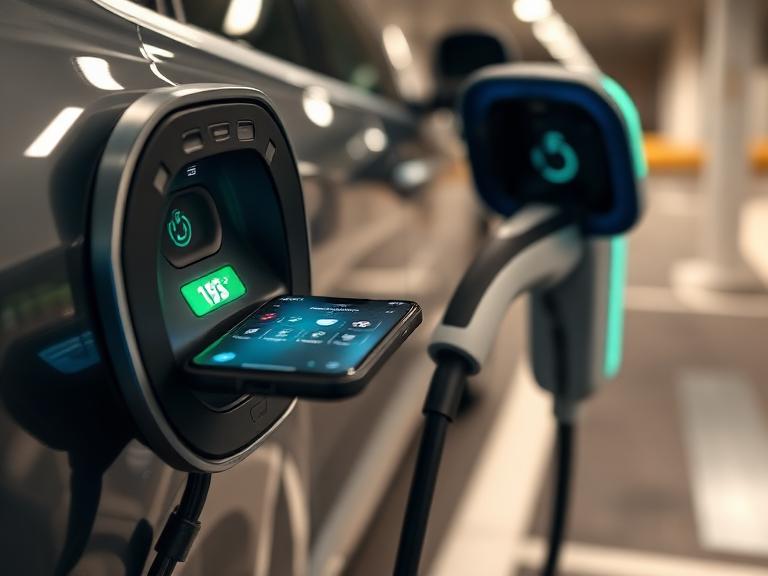
Setting up an EV charging hub in HITEC City involves a systematic implementation workflow:
- Site Assessment & Load Feasibility Study
- Audit existing electrical panels, transformer capacities, and sanctioned load from TSSPDCL (Telangana State Southern Power Distribution Company Limited).
- Perform cable routing assessments, thermal mapping, and cell signal checks for IoT communication.
- Civil & Electrical Engineering Infrastructure
- Install dedicated isolation transformers, sub-panels, Earth Leakage Circuit Breakers (ELCB), and surge protection devices (SPD).
- Lay heavy-duty armored cabling, erect concrete mounting pedestals, and draw distinct bay markings with protective bollards.
- Software & CPO Integration
- Integrate OCPP 1.6J / 2.0.1 compliant hardware with a Central Management System (CMS).
- Set up payment gateways supporting UPI, credit cards, RFID cards, and fleet auto-billing.
- Testing, Statutory Compliance & Commissioning
- Perform safety testing including earth pit resistance checks, insulation resistance testing, and full load tests.
- Secure necessary local authority safety sign-offs and list the location on major mapping networks (Google Maps, PlugShare, Statiq, ElectricPe).
Business & Revenue Models for Property Owners
Property owners and operators in HITEC City can select from several operational models tailored to their capital outlay preferences:
  +-------------------------------------------------------------------------+
  |                        Deployment Models                               |
  +-------------------------------------------------------------------------+
  |                                                                         |
  |  [CAPEX Model]   --> You buy hardware; retain 100% margin.              |
  |  [OPEX Model]    --> Zero upfront cost; share revenue with provider.    |
  |  [Hybrid Model]  --> Shared infrastructure costs and usage profits.    |
  |                                                                         |
  +-------------------------------------------------------------------------+
- CAPEX (Capital Expenditure): You purchase and own the equipment outright. You keep maximum revenue per unit (kWh) sold while paying a nominal software subscription fee for the CPO platform.
- OPEX (Operational Expenditure): The solution provider supplies, installs, and maintains hardware at zero upfront cost to the property owner. In exchange, the property owner earns a revenue-share or monthly land-lease fee.
- Hybrid / Revenue-Share Model: Infrastructure costs are split between the site host and provider, balancing upfront investment against ongoing profits.
Operational Features of Modern Charging Stations
- Dynamic Load Management (DLM): Automatically balances power distribution across multiple charging ports based on realtime campus demand without exceeding transformer limits.
- Multi-Tiered Tariff Engines: Set variable charging rates based on peak and off-peak electricity hours, user classes (e.g., free/discounted for employees, standard rates for visitors), or duration-based pricing.
- Automated Billing & Fleet Portals: Facilitate instant settlement through UPI apps, corporate expense accounts, or automated RFID authorization.
Frequently Asked Questions (FAQs)
1. What are the typical installation costs for an EV charging station in HITEC City?
Installation costs vary based on charger type and site conditions. A standard Level 2 Dual AC (22 kW) commercial charger installation generally ranges between ₹1.5 Lakhs and ₹3.5 Lakhs including civil and electrical work. High-power DC Fast Chargers (60 kW to 120 kW) usually range from ₹8 Lakhs to ₹20+ Lakhs depending on transformer upgrades, cabling distances, and power infrastructure needs.
2. How long does it take to install a commercial EV charging station?
Standard Level 2 AC setups in existing commercial buildings take about 3 to 7 working days once electrical approvals are secured. Large-scale DC fast-charging hubs requiring dedicated transformer setup and TSSPDCL grid connection upgrades typically take 3 to 6 weeks.
3. Do I need a specialized commercial license to sell EV charging in HITEC City?
No. The Ministry of Power has clarified that operating an EV charging station is considered a service rather than the resale of electricity. However, commercial operations must comply with Central Electricity Authority (CEA) safety guidelines and obtain grid connectivity clearance from TSSPDCL.
4. Which EV charging connector types are most common in HITEC City?
For electric cars, CCS2 (Combined Charging System 2) is the primary standard for DC fast charging. For AC charging, Type 2 is the standard for 4-wheelers. Two-wheelers and three-wheelers typically use IEC 60309 sockets, Bharat AC-001 connectors, or brand-specific fast chargers.
5. Can we set up EV chargers in corporate IT parks with restricted employee access?
Yes. CPO software platforms support private access rules. Employees can unlock chargers using designated mobile apps, corporate RFID badges, or authorized whitelist databases, with billing settled directly or subsidized via corporate policies.
6. How does Dynamic Load Management (DLM) protect building electrical systems?
Dynamic Load Management constantly monitors total building power consumption. When overall building electrical demand spikes, the system automatically dials back power to connected chargers, restoring full output when building demand drops. This prevents transformer overloads and avoids costly peak-demand penalties.
7. What electricity tariffs apply to EV charging stations in Telangana?
Telangana maintains a dedicated LT/HT tariff category for public EV charging stations. This tariff is lower than standard commercial rates to encourage clean mobility infrastructure development across the state.
8. How can property owners monetize EV charging infrastructure?
Hosts can monetize stations by:
- Setting per-kWh markup tariffs above raw power costs.
- Applying time-based parking fees for occupied chargers.
- Generating auxiliary revenue from increased footfall at retail or dining venues.
9. What maintenance is required for commercial EV chargers?
AC chargers require minimal maintenance beyond regular visual inspections, emergency button checks, and firmware updates. DC fast chargers require routine preventive maintenance, including air filter cleaning, cable assembly inspections, coolant checks for liquid-cooled units, and periodic calibration.
10. Can high-rise residential apartments in HITEC City install shared EV chargers?
Yes. Gated communities frequently install shared AC chargers in visitor or common parking areas linked to automated management systems. Residents pay for their usage via an app, with power costs credited back to the Housing Society’s utility account.
11. What is the average payback period for a commercial EV charging investment?
Depending on location visibility, utilization rates, and pricing models, commercial EV chargers in high-density areas like HITEC City typically reach payback within 18 to 36 months.
12. Are EV charging stations resistant to Hyderabad’s summer heat and monsoons?
Commercial outdoor hardware is built to IP54/IP65 ingress protection standards and IK10 impact ratings, allowing safe operation during heavy rains and extreme heat conditions typical of Hyderabad.
13. How do users find and pay at these charging stations?
Stations are indexed on major navigation platforms and aggregator apps (e.g., Google Maps, PlugShare, Statiq, ElectricPe). Drivers scan a QR code on the charger, start the session via a mobile app or RFID card, and pay through integrated digital payment options.
14. What are the space requirements for a public DC fast-charging hub?
A dual-gun DC fast charger requires roughly one standard parking bay for the unit and cabling clearance, plus two adjacent parking bays for charging vehicles. Adequate space should also be allocated for an isolation transformer and distribution box nearby.
15. Is green solar power integration supported for EV chargers in HITEC City?
Yes. Smart CPO software can integrate with solar PV arrays or net-metering systems on commercial rooftops. This allows vehicles to charge using solar power during peak daylight hours, maximizing green building compliance and operational cost savings.