Table of Contents
Clinical Warts Removal Treatment Hyderabad | Dr. Showrya Gadde
Cutaneous warts—clinically classified as verrucae—are benign, hyperkeratotic epidermal proliferation growths caused by localized cutaneous infection with variants of the Human Papillomavirus (HPV). HPV represents a double-stranded DNA virus that selectively targets basal keratinocytes of the cutaneous epithelia. Once inside, the viral DNA manipulates host cellular machinery, inducing rapid keratinocyte division, marked epidermal acanthosis, hyperkeratosis, and papillomatosis.
Across the expanding technology, commercial, and residential districts of Hyderabad—including Kondapur, Madhapur, HITEC City, Gachibowli, Jubilee Hills, and Banjara Hills—cutaneous warts are a common dermatological concern. Shared public facilities (such as tech-park fitness centers, swimming pools, and sports clubs), high ambient summer temperatures, prolonged wearing of closed footwear, and compromised skin barriers create an ideal environment for viral transmission and autoinoculation.
Navigating wart management requires moving away from over-the-counter chemical paint drops, unverified acid solutions, or aggressive salon procedures. On South Asian skin phototypes (Fitzpatrick Types IV–VI), improperly performed home remedies or unsterilized cutting often burns healthy dermal tissue, fails to eradicate deep viral capillary roots, and leaves noticeable atrophic scars or post-inflammatory hyperpigmentation (PIH).
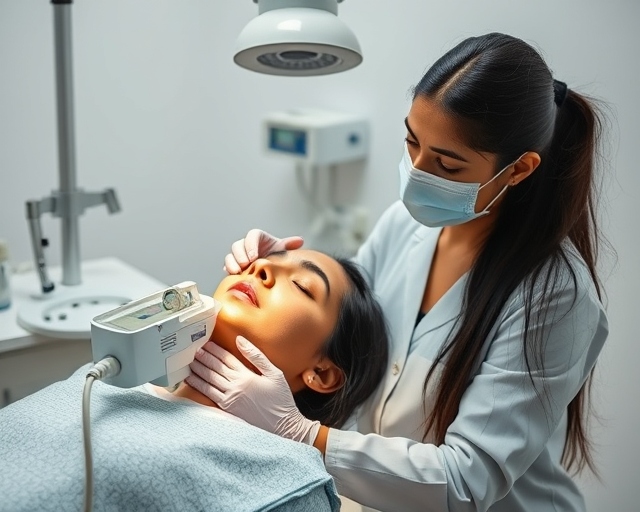
Seeking specialized Warts Removal Treatment in Hyderabad provides a medically supervised approach to complete viral eradication. At Dr. Showrya Gadde Dermatology & Wellness (located in Jubilee Enclave, Kondapur, near HITEC City), cutaneous viral lesions are evaluated by Dr. Showrya Gadde (MBBS, DNB – Dermatology & Venereology). By combining diagnostic dermoscopy, Radiofrequency (RF) ablation, Fractional CO2 laser therapy, Liquid Nitrogen Cryotherapy, and Intralesional Immunotherapy, the clinic provides precise, safe, and recurrence-free clearance.
1. Pathophysiology: How Human Papillomavirus (HPV) Causes Cutaneous Warts
Understanding how HPV infects epidermal cells highlights why superficial treatments fail to prevent recurrences:
Phase 1: Viral Micro-Entry and Basal Layer Inoculation
The virus cannot breach intact, healthy stratum corneum. Transmission occurs when microscopic cuts, scratches, razor nicks, dry skin cracks, or macerated skin folds allow HPV particles to reach the basal epithelial layer.
Phase 2: Cellular Reprogramming and Hyper-Proliferation
Once inside basal stem keratinocytes, viral early proteins (E6 and E7) alter normal cell cycle controls. The infected keratinocytes accelerate their division, causing the epidermis to thicken significantly (acanthosis) and produce excessive surface keratin (hyperkeratosis).
Phase 3: Vascular Co-Opting (Thrombosed Capillaries)
To sustain its rapid growth, the expanding wart induces local blood vessel formation (angiogenesis). Dermal capillary loops dilate and extend vertically into the elongated papillary dermal ridges. Over time, micro-thrombi form within these tiny vessel tips, appearing clinically as pathognomonic pinpoint black dots (“wart seeds”).
Phase 4: Viral Shedding and Autoinoculation
As infected keratinocytes migrate upward into the stratum corneum, mature viral particles assemble and shed onto surrounding skin or external surfaces. Scratching, shaving, or picking at the lesion transfers viral particles to distant skin sites, leading to multiple secondary warts.
2. Clinical Classification of Cutaneous Warts
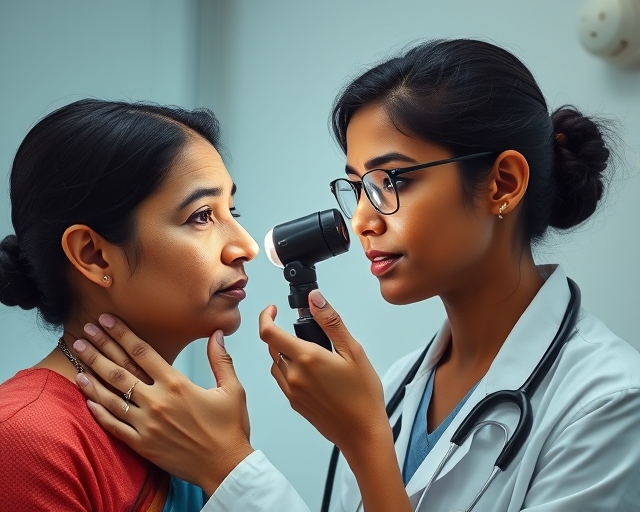
During a diagnostic examination, a dermatologist uses dermoscopy to classify warts based on viral strain, morphological shape, and anatomical depth:
Verruca Vulgaris (Common Warts)
Rough, firm, hyperkeratotic papules or nodules with a “cauliflower-like” surface. Typically caused by HPV strains 1, 2, 4, and 7, they occur primarily on the dorsum of hands, fingers, knees, and elbows.
Verruca Plantaris (Plantar Warts)
Occurs on weight-bearing surfaces of the soles of the feet (heels and balls of feet). Due to walking pressure, the wart is pushed inward into the thick plantar dermis, forming a flat, hard, painful lesion surrounded by a thick callus. Disrupted footprint lines (dermatoglyphics) and painful response to side-to-side squeezing distinguish it from a non-viral corn.
Filiform Warts (Verruca Filiformis)
Distinctive, narrow, thread-like projections extending outward from a small, thin base. Driven by HPV strains 1, 2, and 3, they appear on delicate facial areas such as eyelids, lips, nostrils, and neck.
Verruca Plana (Flat Warts)
Smooth, flat-topped, skin-colored or light brown papules ($1\text{ to }5\text{ mm}$) occurring in large clusters. Typically caused by HPV strains 3 and 10, they spread along razor scratch paths (linear Koebner phenomenon) across the face, neck, or shins.
Periungual and Subungual Warts
Form around or beneath fingernails and toenails. Driven by chronic nail-biting or cuticle picking, these lesions can distort normal nail plate growth and penetrate deep under the nail bed, requiring precise surgical management.
3. Clinical Comparison: Viral Warts vs. Non-Viral Skin Lesions
Accurate medical diagnosis is critical because non-viral skin growths require completely different management strategies:
| Clinical Feature | Cutaneous Viral Wart (Verruca) | Foot Corn (Heloma Durum) | Skin Tag (Acrochordon) | Seborrheic Keratosis |
| Primary Underlying Cause | Human Papillomavirus (HPV) infection | Mechanical friction & pressure | Friction & insulin resistance | Benign epidermal proliferation |
| Skin Line Pattern | Dermatoglyphics disrupted around lesion | Dermatoglyphics pass continuously over lesion | Normal skin texture | Intact underlying lines |
| Vascular Black Dots | Present (Thrombosed capillaries) | Absent (Homogeneous keratin core) | Absent | Absent (Pseudocomedone cysts) |
| Pain Sensitivity Pattern | Painful on side-to-side squeezing | Painful on direct vertical pressure | Painless (Unless twisted) | Painless |
| Contagion Potential | Highly contagious to self & others | Non-contagious | Non-contagious | Non-contagious |
| Primary Clinical Strategy | RF Cautery / Laser / Cryotherapy | Pressure offloading / Salicylic removal | Radiofrequency snipping | RF Cautery / Cryo-ablation |
4. Advanced Clinical Modalities for Warts Removal in Hyderabad
Top dermatological clinics use advanced, targeted procedures to eliminate viral tissue cleanly while preserving surrounding healthy skin structures.
1. Monopolar / Bipolar Radiofrequency (RF) Ablation
A precise, in-office surgical procedure favored for common, filiform, and periungual warts.
- Mechanism: Ultra-high frequency electrical current ($3.8\text{ to }4.0\text{ MHz}$) passes through a micro-electrode tip, generating instant thermal energy within intracellular water molecules. This vaporizes infected keratinocytes layer-by-layer while sealing feeding capillaries simultaneously.
- Clinical Advantages: Minimal collateral thermal injury, excellent visual control, zero bleeding, and fast healing with low risk of scarring.
2. Fractional CO2 Laser Ablation (10,600nm)
The preferred gold-standard treatment for stubborn, recalcitrant, or large multi-centric warts.
- Mechanism: Infrared laser light ($10,600\text{ nm}$) is selectively absorbed by water in viral cells, instantly vaporizing the wart architecture down to its base. Thermal coagulation also destroys deep viral capillary loops, starving any remaining infected cells.
- Clinical Advantages: Ideal for difficult subungual or recalcitrant plantar warts; yields high single-session clearance rates.
3. Liquid Nitrogen Cryotherapy (-196°C)
A controlled freezing technique widely used for multiple flat warts or palmoplantar lesions.
- Mechanism: Sub-zero liquid nitrogen is applied via a specialized cryo-spray gun. Rapid freezing forms intracellular ice crystals that rupture infected cell membranes and disrupt feeding blood vessels, causing the wart to form a clean blister and drop off within 7 to 10 days.
4. Intralesional Antigen Immunotherapy
An evidence-based biological approach reserved for widespread, multi-centric, or recurrent recalcitrant warts.
- Mechanism: Purified antigens (such as Measles-Mumps-Rubella [MMR] or Candida antigen) are injected directly into a single primary “mother” wart. The injected antigen triggers a systemic cell-mediated immune response (Th1 T-cells), training the patient’s immune system to recognize and clear both the primary wart and distant untreated secondary lesions.
5. Treatment Selection Matrix Based on Wart Subtype
| Wart Variant | Dominant Location | First-Line Preferred Modality | Secondary Synergistic Modality | Expected Clearance Timeline |
| Filiform Warts | Eyelids, lips, nostrils, neck | Radiofrequency (RF) Micro-Cautery | Targeted CO2 Laser Ablation | Single Session (3–5 days healing) |
| Verruca Vulgaris | Hands, knuckles, knees, elbows | Radiofrequency Ablation | Cryotherapy / CO2 Laser | 1 – 2 Sessions (7–10 days healing) |
| Plantar Warts | Soles, heels, ball of foot | Fractional CO2 Laser Ablation | Cryotherapy / Salicylic Debridement | 2 – 3 Sessions (10–14 days healing) |
| Verruca Plana | Face, forehead, shins, neck | Mild Cryotherapy / Low-RF Cautery | Topical Retinoids / Immunotherapy | 2 – 4 Sessions (5–7 days healing) |
| Recalcitrant / Multiple | Multi-site or resistant zones | Intralesional Antigen Immunotherapy | Combined CO2 Laser Ablation | 3 – 4 Sessions (spaced 3 wks apart) |
6. Cost Breakdown of Warts Removal Treatment in Hyderabad
Pricing for professional wart removal across top dermatological clinics in Hyderabad depends on practitioner expertise, technology grade (US-FDA approved RF/Laser platforms), anatomical location, and total lesion count:
| Medical Service / Procedure | Scope & Clinical Parameters | Estimated Cost Range (INR) | Session / Count Basis |
| Specialist Dermatologist Consultation | Dermoscopic assessment & mapping | ₹700 – ₹1,200 | Initial visit & reviews |
| RF / Laser Removal (Single Wart) | Single common, filiform, or plantar wart | ₹1,500 – ₹3,500 | Per single lesion procedure |
| RF / Laser Removal (Multiple Warts) | 2 to 5 lesions (face or body) | ₹3,500 – ₹6,500 | Package cost for cluster |
| Extensive Facial Flat Warts Ablation | Multiple flat warts ($>10\text{ lesions}$) | ₹5,500 – ₹10,000 | Full face / neck clearing session |
| Liquid Nitrogen Cryotherapy | 1 to 3 freeze sessions | ₹2,000 – ₹4,500 | Per session treatment |
| Intralesional Antigen Immunotherapy | Biological antigen micro-injection | ₹3,000 – ₹6,000 | Per intralesional session |
7. Local Environmental Triggers in Hyderabad & Post-Care Guidelines
Achieving complete clearance and preventing viral reinfection requires managing environmental factors common in Hyderabad:
Regional Transmission Factors & Prevention
- High Summer Heat & Gym Hygiene: Fitness enthusiasts across Kondapur, Madhapur, and HITEC City often contract plantar warts by walking barefoot in humid gym locker rooms, shower stalls, or yoga studios. Prevention: Always wear protective rubber slippers in public wet areas and gym changing rooms.
- Hard Borewell Water (High TDS): Ground and tap water in expanding residential sectors contain high Total Dissolved Solids (TDS) such as calcium and magnesium. Washing freshly treated skin with hard tap water can irritate healing wounds. Protection: Use lukewarm filtered or RO water to clean treated sites during the first 48 hours, then apply prescribed antibiotic ointment.
- Nail-Biting and Razor Autoinoculation: Men who shave facial hair or individuals who bite cuticles easily spread HPV along razor tracks or around nail beds. Protection: Avoid shaving directly over facial warts, replace razor blades frequently, and stop nail-biting habits.
8. Daily Dermatologist-Approved Post-Removal Care Protocol
To ensure rapid skin recovery and prevent scarring after laser or RF ablation, follow this structured home care routine:
9. Frequently Asked Questions (FAQs)
1. What is the most effective Warts Removal Treatment in Hyderabad?
The most effective treatment depends on the anatomical location, size, and depth of the wart. At Dr. Showrya Gadde Dermatology & Wellness, Radiofrequency (RF) Cautery and CO2 Laser Ablation provide precise, single-session destruction of common and filiform warts. Deep plantar warts and widespread recalcitrant lesions are managed using Liquid Nitrogen Cryotherapy or Intralesional Immunotherapy.
2. What causes viral warts on the skin?
Warts are benign epidermal growths caused by infection with the Human Papillomavirus (HPV). The virus enters the skin through tiny microscopic cuts, abrasions, or broken skin barriers, stimulating epidermal cells to hyper-proliferate and form thick, hyperkeratotic lesions.
3. How much does clinical wart removal cost in Hyderabad?
At Dr. Showrya Gadde Dermatology & Wellness, initial specialist consultation fees range from ₹700 to ₹1,200. Radiofrequency (RF) or Laser removal costs ₹1,500 to ₹3,500 for single isolated lesions. Multiple lesions or complex plantar warts range between ₹3,500 and ₹8,500 depending on total count, size, and surgical depth.
4. Why do over-the-counter wart paints and home remedies frequently fail?
Over-the-counter salicylic acid paints or home remedies (like garlic, duct tape, or battery acid drops) only burn superficial dead skin cells. They fail to reach deep dermal blood vessels (thrombosed capillaries) that feed the viral roots, leading to high recurrence rates, tissue scarring, and severe chemical burns.
5. Is clinical wart removal painful?
No. Clinical procedures like Radiofrequency Cautery and CO2 Laser Ablation are performed under local anesthesia (topical numbing cream or local lidocaine injection). Patients experience zero pain during the intervention and only mild post-procedure soreness.
6. What is the difference between a corn and a plantar wart?
A corn is a non-viral thickening of skin caused by mechanical friction or pressure, displaying a clear central core with intact skin lines. A plantar wart is a viral infection (HPV-1/4) characterized by disrupted dermatoglyphics (footprint lines), pinpoint black spots (thrombosed capillaries), and sharp pain when squeezed side-to-side.
7. Will clinical wart removal leave visible scars on the face or body?
When performed by a board-certified dermatologist using precision Radiofrequency micro-electrodes or targeted CO2 lasers, energy delivery is strictly confined to the infected epidermal zone. Surrounding healthy collagen is preserved, resulting in minimal to non-existent scarring.
8. Are skin warts contagious to other body parts and family members?
Yes. HPV is contagious. Warts spread to other body areas through self-inoculation (scratching, shaving, biting nails) and to family members via direct skin-to-skin contact or shared personal items like towels, nail clippers, razor blades, and damp bathroom floors.
9. How does Liquid Nitrogen Cryotherapy remove viral warts?
Cryotherapy applies sub-zero liquid nitrogen (-196°C) to freeze the wart tissue. Rapid freezing forms intracellular ice crystals that burst infected keratinocyte cell membranes, cutting off viral vascular supply and causing the wart to blister and fall off within 7 to 10 days.
10. What is Intralesional Immunotherapy for stubborn or multiple warts?
Intralesional immunotherapy involves injecting an antigen (such as purified Measles-Mumps-Rubella or Candida antigen) directly into a primary “mother” wart. This stimulates systemic cell-mediated immunity (T-cell response), training the body’s immune system to clear both the primary wart and distant untreated warts.
11. How long does it take for skin to heal after laser or RF wart removal?
Initial superficial healing occurs within 3 to 7 days, during which a small protective scab forms. The scab naturally sheds between 7 and 10 days, revealing healthy new skin underneath.
12. How does Hyderabad’s climate and hard tap water affect wart healing?
Hyderabad’s summer heat causes excessive sweating, while hard borewell tap water in areas like Kondapur and Madhapur contains high Total Dissolved Solids (TDS) such as calcium and magnesium. Washing freshly treated skin with hard tap water can irritate the delicate barrier, requiring the use of post-procedure antibiotic ointments and filtered water.
13. Can facial filiform warts around eyelids or lips be removed safely?
Yes. Filiform warts feature delicate, thread-like projections attached by narrow bases on eyelids, nostrils, or lips. They are removed cleanly using fine micro-electrode Radiofrequency cautery under magnification, ensuring complete excision without eyelid or lip scarring.
14. What post-care instructions should be followed after wart removal?
Keep the treated area dry for 24 hours, apply prescribed topical antibiotic-cicatrizing ointment twice daily, avoid picking or picking at formed scabs, refrain from swimming or sauna usage until fully healed, and apply broad-spectrum sunscreen to prevent post-inflammatory hyperpigmentation.
15. Why choose Dr. Showrya Gadde Dermatology & Wellness for Warts Removal in Hyderabad?
Under the leadership of Dr. Showrya Gadde (MBBS, DNB – Dermatology), our clinic provides diagnostic evaluation, US-FDA approved laser and RF technology, strict sterile surgical protocols, and personalized care designed to prevent viral recurrence.
10. Schedule Your Clinical Wart Evaluation
Removing stubborn viral warts and preventing recurrences requires precise medical diagnosis and specialized dermatological care. If painful plantar warts, facial filiform lesions, or spreading hand warts are affecting your comfort, schedule a consultation with Dr. Showrya Gadde at Dr. Showrya Gadde Dermatology & Wellness in Jubilee Enclave, Kondapur, Hyderabad. A clinical examination will determine the exact viral depth and establish a safe, effective path to clear, healthy skin.