
Table of Contents
Field Engineering Protocols for High-Traffic Traction Systems: Elevator Technician Near Hitech City
Maintaining vertical mobility infrastructure within hyper-dense IT zones, commercial high-rises, and sprawling premium residential townships demands specialized electro-mechanical expertise. In the Hitech City corridor of Hyderabad—spanning micro-markets like Mindspace, Madhapur, Kondapur, the Financial District, and Gachibowli—elevators are subjected to relentless, high-cycle utilization.
With commercial towers operating multi-car destination control systems and high-speed gearless traction machines, a single component failure can disrupt business operations, affect corporate productivity, and create safety risks. Finding a certified, competent elevator technician near hitech city is critical for preventive maintenance, emergency breakdowns, and keeping systems compliant with evolving state lift safety codes.
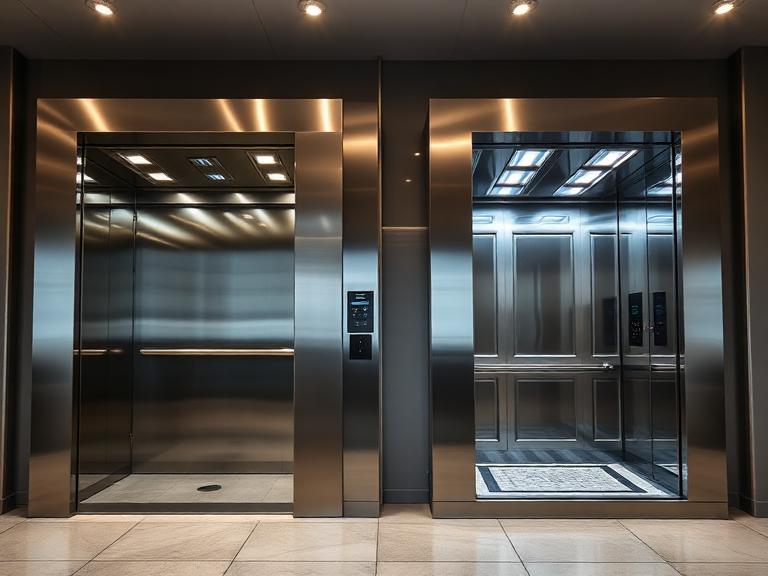
1. The Hitech City Urban Profile: Technical Demands on Local Technicians
Elevator infrastructure in Hyderabad’s tech hub faces unique operating conditions that are rarely seen in purely residential cities. Field engineers in this area must possess advanced diagnostic skills tailored to these specific demands.
A. High-Speed Gearless Traction Systems
Unlike standard low-rise residential blocks that use traditional geared machines, premium corporate properties in Hitech City use high-speed gearless traction machines powered by permanent magnet synchronous motors (PMSM). These advanced systems operate at velocities exceeding $2.5\text{ m/s}$ and use complex Variable Voltage Variable Frequency (VVVF) inverter drives to ensure smooth acceleration and deceleration.
Technicians must know how to troubleshoot and calibrate these drives, manage regenerative braking feedback, and balance high-speed elevator cars perfectly.
B. Destination Control Systems (DCS) and Integrated Automation
Modern office towers use Destination Control Systems to maximize traffic efficiency. Rather than pressing a simple up or down button inside the car, passengers select their destination floor at a touchscreen kiosk in the lobby. The central system group controller runs optimization algorithms to assign the passenger to a specific elevator car.
A local field engineer must be proficient in microprocessor networking, RS-485 communication protocols, and fiber-optic data loops to prevent software lag or group communication failures from stranding whole floors.
2. Crucial Diagnostic Protocols for Field Engineers
When an elevator shuts down unexpectedly or experiences ride-quality issues, local technicians follow systematic diagnostic protocols to isolate the root cause before opening any enclosures.
1. Inverter Drive and Solid-State Controller Diagnostics
When a VVVF drive fails, the elevator controller logs specific fault codes, such as overcurrent, overvoltage, or thermal overload. Technicians connect a handheld service tool to the controller to read the fault logs and review the operational parameters.
[Isolate Main Power Switch] ──► [Measure DC Bus Voltage] ──► [Test IGBT Transistor Modules]
To test the system safely, engineers isolate the main incoming power line and check the internal DC bus voltage with a digital multimeter to confirm it has fully discharged. They then test the Insulated Gate Bipolar Transistor (IGBT) power modules for internal short-circuits. They also inspect the drive’s cooling fans, as the high heat in local machine rooms can cause these fans to fail, leading to thermal shutdown.
2. Resolving Floor-Leveling Inaccuracies
Floor-leveling accuracy is an important safety metric. If a lift car stops even $5\text{ mm}$ above or below the landing sill, it creates a tripping hazard for passengers.
Technicians resolve leveling issues by inspecting the hoisting cables for uneven stretching and checking the positioning sensors mounted on top of the elevator car. They also recalibrate the magnetic tape indicators or optical vane switches inside the hoistway to ensure the car stops perfectly flush with the floor landing under all load conditions.
3. Traction Sheave Wear and Cable Tension Calibration
As hoisting cables pass over the machine’s drive sheave millions of times, the sheave grooves can develop uneven wear patterns. Technicians use precision groove gauges to measure the wear profile.
They also use a digital tension meter to check that weight is distributed evenly across all steel ropes. If tension levels vary by more than $5\%$, the ropes will slip in the sheave grooves, causing vibrations during travel and accelerating wear on the machine components.
3. Step-by-Step Brake System Overhaul and Recalibration
The mechanical brake assembly on a gearless traction machine is a vital safety component. It must be regularly inspected, serviced, and calibrated to ensure passenger safety.
1.Hoistway Isolation and Counterweight Balancing:Phase I.
Technicians drive the elevator car to the top of the hoistway to align it with the counterweight, balancing the suspension loads. They turn off the main circuit breakers and apply heavy-duty physical rail clamps to secure the car completely before starting any mechanical work.
2.Mechanical Disassembly and Friction Core Inspection:Phase II.
Engineers carefully disassemble the dual-plunger electromagnetic brake calipers. They measure the thickness of the friction lining pads with a digital micrometer to ensure they exceed minimum wear limits, and check the steel backing plates for any signs of heat cracking or glazing.
3.Electromagnetic Solenoid Cleaning and Spring Tension Setup:Phase III.
Technicians clean the internal solenoid bores to remove any carbon dust or debris that could cause the brake arms to stick. They use a calibrated torque wrench to adjust the heavy compression springs back to the manufacturer’s exact specifications, ensuring the correct mechanical braking force is applied.
4.Air Gap Adjustment and Electrical Switch Calibration:Phase IV.
Using feeler gauges, the engineering team sets the running air gap between the armature and the magnet core, adjusting it to the precise tolerance (typically between $0.2\text{ mm}$ and $0.35\text{ mm}$). They also adjust the integrated microswitches that confirm when the brake has fully opened or closed.
5.Dynamic Load Drop and Leveling Performance Verification:Phase V.
Technicians remove the safety rail clamps and restore system power. They run a full load test by placing test weights inside the cabin and executing emergency brake stops at rated travel speed, verifying that the car stops safely within code tolerances without slipping.
4. Maintenance Selection Matrix: Choosing the Right Service Tier
Selecting the appropriate service model helps property managers control long-term operating costs while keeping vertical transit systems safe and reliable.
Elevator Maintenance Contract Guide
| Service Level Tier | Included Technical Deliverables | Recommended Structural Application | Preventative Maintenance Frequency |
| Ordinary / Semi-Comprehensive | Covers regular lubrication, structural alignments, and minor switch adjustments. Spare parts, electronic modules, and emergency breakdown callbacks are billed separately. | Low-rise residential buildings and standalone retail blocks with standard usage. | Once every calendar month. |
| Full Comprehensive AMC | Provides complete coverage including regular inspections, 24/7 breakdown callbacks, and repair or replacement of major assemblies like VVVF drives, hoisting ropes, and brake linings. | High-occupancy commercial properties, IT office parks, and major medical centers. | Twice every calendar month plus on-site support. |
| Predictive Engineering IoT Option | Uses connected sensor pods to monitor motor vibrations, door cycle times, and temperature changes in real time. Advanced data analytics flag wear patterns before components fail. | Premium tech developments, corporate campuses, and high-speed multi-car complexes. | Continuous digital monitoring with immediate field technician dispatch. |
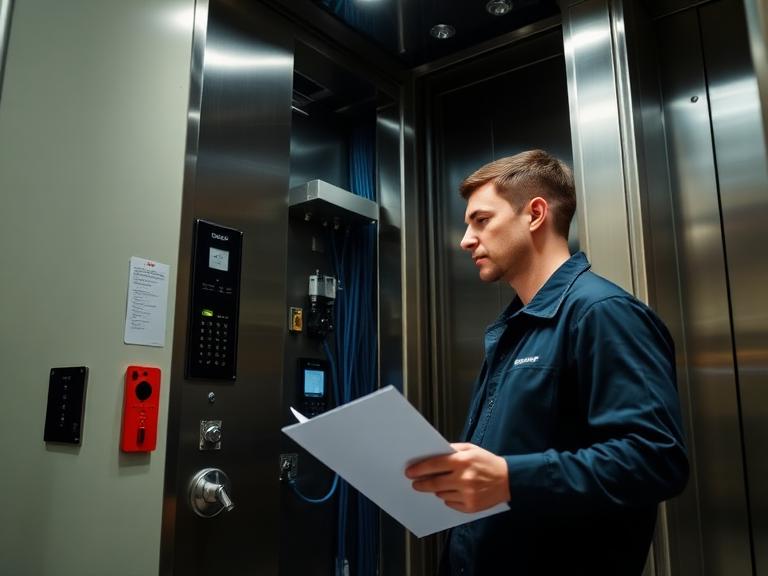
5. Regulatory Compliance and the Evolving Telangana Lifts Act
Operating an elevator in Hyderabad comes with strict legal and safety responsibilities that building owners and facility managers must follow.
[Chief Electrical Inspectorate (CEIG)] ──► Conducts Field Safety Audits ──► Issues Licensing (Form-F)
Statutory Safety Mandates
- The Legislative Framework: All elevators in the state operate under the regulatory oversight of the Chief Electrical Inspectorate to Government (CEIG). Property owners are legally required to secure a valid license before putting any lift into public service.
- Evolving Safety Updates: The Telangana state government has introduced updated legislative guidelines through the Telangana Lifts, Escalators, and Passenger Conveyors framework. These rules establish clear legal accountability and stiff financial penalties for property owners who run lifts with expired operation permits or use unlicensed technicians for repairs.
- Mandatory Safety Features: To pass annual state inspections and secure license renewals, lifts must be equipped with functional Automatic Rescue Devices (ARD), electronic overload sensors, infrared door curtains, emergency exit hatches, and cabin communication lines connected directly to a 24-hour security desk.
6. Sourcing a Qualified Elevator Technician in Hitech City
To avoid voiding equipment warranties or running into regulatory compliance issues, facility managers should screen local service providers using clear technical criteria.
Essential Evaluation Checklist
- Check Licensing and Credentials: Verify that the technician’s firm is fully registered with the Telangana State Electrical Licensing Board and holds a valid Class-A Electrical Contractor License.
- Confirm Specialized Technical Expertise: Ensure technicians are certified to work on your specific equipment type, whether it is a gearless traction machine, a hydraulic commercial lift, or a specialized machine-room-less (MRL) layout.
- Evaluate Emergency Response Logistics: Confirm the provider can commit to strict emergency response times (such as arriving within 30 minutes for passenger entrapments) by maintaining a dedicated field service team within the Hitech City and Madhapur zones.
- Audit Spare Parts Availability: Verify that the service provider maintains a local parts inventory stocked with genuine components, including controller boards, safety switches, and replacement door parts, to ensure fast repair turnaround times.

7. Frequently Asked Questions (FAQs)
Q1: What causes an elevator car to shake or vibrate while moving between floors?
A: Lift vibrations are usually caused by mechanical wear or misalignment. The most common causes include uneven tension across the steel hoisting ropes, worn or damaged guide shoes sliding along the hoistway rails, or accumulation of dust and old grease in the rail tracks. Having a technician clean the guide rails and balance rope tensions typically resolves the issue.
Q2: How does an Automatic Rescue Device (ARD) operate during a power outage?
A: When main utility power fails, the ARD system senses the voltage drop and cuts in automatically within a few seconds. It draws power from a dedicated backup battery pack to release the motor brakes and drive the lift car at a reduced speed to the nearest available floor landing, where it opens the doors to allow passengers to exit safely.
Q3: Why does our lift’s drive system require regular software parameter updates?
A: As elevator mechanical components like steel cables, sheaves, and structural joints break in and settle over time, their operating friction profiles change. Technicians update and tune the VVVF drive control parameters during routine service to compensate for this natural wear, keeping acceleration smooth and maintaining leveling accuracy.
Q4: What are the legal risks of running an elevator with an expired state operation license?
A: Under state lift safety laws, operating an elevator without a valid license or with an expired permit is a serious offense that can result in immediate equipment shutdown orders and heavy financial fines. Additionally, if an accident occurs in an unlicensed elevator, the building owner or facility manager can face direct civil and criminal liability, and any commercial insurance coverage may be voided.
Q5: How often should the steel hoisting ropes on a high-use commercial lift be replaced?
A: Steel hoisting ropes typically provide a service life of 5 to 8 years in standard high-use settings. However, ropes must be replaced immediately if a technician finds significant wear during inspection, such as a reduction in rope diameter exceeding $6\%$, visible micro-cracks or broken wires along the outer strands, or signs of severe rust and pitting.