
Table of Contents
EV Charging EPC Contractors in Telangana | Turnkey Solutions & Setup Guide
The transition toward electric mobility across Telangana is accelerating at an unprecedented pace. Driven by the Telangana Electric Vehicle and Energy Storage Policy, rapid expansion along the Outer Ring Road (ORR), and intensive industrial growth across Cyberabad, Warangal, and Nizamabad, the demand for robust charging infrastructure has skyrocketed.
Deploying a commercial, fleet, or public EV charging station is not merely a plug-and-play exercise. It demands sophisticated electrical engineering, high-voltage civil works, regulatory clearances from TGREDCO (Telangana Renewable Energy Development Corporation) and state DISCOMs (TGSPDCL & TGNPDCL), as well as complex software integration.
This comprehensive technical guide evaluates the ecosystem of EV charging EPC contractors in Telangana, breaking down turnkey execution workflows, utility grid approvals, power infrastructure designs, commercial viability models, and safety compliance protocols.
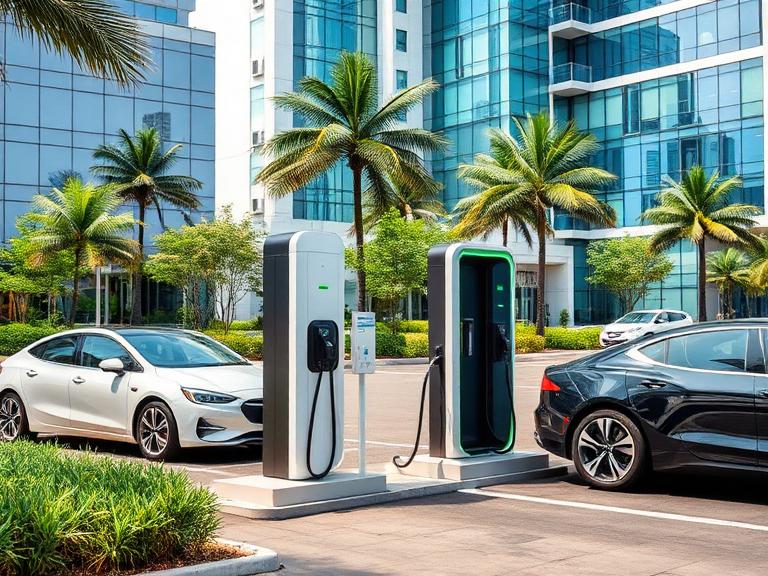
What is an EV Charging EPC Contractor?
An EPC Contractor (Engineering, Procurement, and Construction) provides end-to-end turnkey services to take an EV charging project from conceptual site assessment to full commercial operation. Instead of engaging multiple architects, electrical contractors, equipment suppliers, and liaison agents, a CPO or site host partners with a single EPC firm to handle all phases.
       +-------------------------------------------------------+
       |               EPC TURNKEY ARCHITECTURE                |
       +-------------------------------------------------------+
                                   |
         +-------------------------+-------------------------+
         |                         |                         |
         v                         v                         v
+------------------+     +------------------+     +------------------+
|   ENGINEERING    |     |   PROCUREMENT    |     |   CONSTRUCTION   |
|                  |     |                  |     |                  |
| • Site Feasibility|     | • Fast Chargers  |     | • Civil Trenches |
| • Load Analysis  |     | • Transformers   |     | • Transformer Pad|
| • SLD & Layouts  |     | • HT/LT Panels   |     | • Cable Laying   |
| • CEIG Drawings  |     | • CMS Software   |     | • Grid Hookup    |
+------------------+     +------------------+     +------------------+
         |                         |                         |
         +-------------------------+-------------------------+
                                   |
                                   v
       +-------------------------------------------------------+
       |   STATUTORY APPROVALS & COMMISSIONING (TGREDCO/DISCOM)|
       +-------------------------------------------------------+
Core Phases of Turnkey EPC Execution:
- Engineering (E): Detailed electrical Single Line Diagrams (SLD), site layout design, transformer and HT/LT panel sizing, cable voltage-drop calculations, structural foundation engineering, and short-circuit protection studies.
- Procurement (P): Sourcing certified EV Supply Equipment (EVSE)—including CCS2, CHAdeMO, and Type-2 AC chargers—distribution transformers, Ring Main Units (RMU), armored copper/aluminum cabling, metering panels, and safety gear.
- Construction (C): Civil works (pad foundations, canopy erection, cable trenching), electrical installation (substation setup, earthing grid deployment, breaker installation), grid interconnection, testing, and DISCOM/CEIG commissioning.
The EV Charging Ecosystem in Telangana: Regulatory & Utility Landscape
Navigating the local utility and administrative landscape in Telangana is a core competence of qualified EPC contractors. Key agencies governing EV charging infrastructure deployments include:
1. TGREDCO (Telangana Renewable Energy Development Corporation Ltd.)
Formerly known as TSREDCO, TGREDCO serves as the Nodal Agency for implementing e-mobility and charging infrastructure across Telangana. EPC contractors liaise with TGREDCO for land allocation under Public-Private Partnership (PPP) models, central/state subsidy claims, and state-level EV registry tracking.
2. DISCOMs: TGSPDCL & TGNPDCL
- TGSPDCL (Southern Power Distribution Company of Telangana Ltd.): Oversees power distribution in Hyderabad, Rangareddy, Medchal, Mahabubnagar, Nalgonda, and surrounding southern districts.
- TGNPDCL (Northern Power Distribution Company of Telangana Ltd.): Manages power distribution in Warangal, Karimnagar, Nizamabad, Khammam, and northern territories.
EPC contractors file load sanction applications under dedicated EV Charging Tariffs, which offer preferential per-unit electricity rates without prohibitive demand charges during initial operational years.
3. CEIG (Chief Electrical Inspectorate to Government)
For high-tension (HT) installations exceeding 650V or aggregate loads above 50 kW, formal approval from the CEIG Telangana is mandatory before energization. The EPC contractor submits protective relay settings, transformer test certificates, earthing resistance reports, and physical layout safety clearances to secure the CEIG Safety Certificate.
Services Offered by EV Charging EPC Contractors in Telangana
A professional EPC contractor delivers comprehensive capability across every layer of project implementation:
+-----------------------------------------------------------------------+
|                 EV CHARGING EPC CONTRACTOR SERVICES                   |
+-----------------------------------------------------------------------+
|  1. Technical Site Assessment & Grid Feasibility Studies              |
|  2. Load Sanctioning & DISCOM Liaison (TGSPDCL / TGNPDCL)             |
|  3. Complete Civil & Structural Construction Works                    |
|  4. High-Voltage & Low-Voltage Electrical System Integration           |
|  5. EVSE Equipment Sourcing (OEM Agnostic Supply)                     |
|  6. CMS Software Integration & Payment Gateway Setup                  |
|  7. Statutory Approvals & CEIG Inspection Clearance                   |
|  8. Operations, Predictive Maintenance & SLA Support                  |
+-----------------------------------------------------------------------+
Technical Services Breakdown:
- Site Feasibility & Load Sanctioning: Conducting load availability tests at the nearest DISCOM feeder, assessing distance to the distribution transformer, and applying for dedicated commercial EV power connections.
- Civil & Structural Engineering: Excavating cabling trenches, pouring reinforced concrete pads for heavy DC fast chargers and transformers, installing weather-proof canopies, and marking out dedicated EV parking bays.
- Electrical Infrastructure Installation: Fitting HT panels, step-down distribution transformers (11kV/33kV to 415V), LT distribution boards, Molded Case Circuit Breakers (MCCB), Residual Current Devices (RCD/RCCB), and multi-point earthing pits.
- Hardware & Software Integration: Mounting EV chargers, connecting them via Ethernet/4G to a Charge Point Management System (CMS) through OCPP 1.6J or 2.0.1 protocols, enabling RFID and UPI payment gateways.
- Testing & Final Energization: Insulation resistance testing, earth loop impedance measurement, relay calibration, dummy load testing, and joint inspection with DISCOM officials.
Technical Specifications: AC vs DC Charging Infrastructure
When engineering an EV charging hub in Telangana, EPC contractors design power distribution matrices based on the required charging speeds and vehicular throughput:
| Feature / Parameter | Slow/Fast AC Charging | Rapid DC Fast Charging | Ultra-Fast DC Charging Hubs |
| Typical Power Output | 3.3 kW to 22 kW | 30 kW to 120 kW | 150 kW to 360 kW+ |
| Connector Standard | Type 2 AC, Bharat AC-001 | CCS2, CHAdeMO, GB/T | CCS2 / MCS (Megawatt) |
| Primary Vehicle Target | 2Ws, 3Ws, Long-dwell 4Ws | Passenger EVs, Taxis, Light Commercial | Fleet Buses, Heavy Trucks, Highway EVs |
| Power Input Requirement | 230V 1-Phase / 415V 3-Phase LT | 415V 3-Phase LT / HT Substation | Dedicated 11kV/33kV HT Substation |
| Average Dwell Time | 4 to 8 Hours | 30 to 60 Minutes | 15 to 25 Minutes |
| Ideal Locations | Apartments, IT Parks, Hotels | Malls, Highway Hubs, Commercial Plazas | ORR Interchanges, Bus Depots, Logistics |
| Substation Required? | No (Uses local LT grid) | Optional (Required if aggregate > 100kW) | Mandatory Dedicated Substation |
Step-by-Step Project Execution Timeline
A commercial EV charging station project in Hyderabad or wider Telangana typically spans 45 to 90 days depending on grid power capacity requirements.
Project Milestones Breakdown:
1. Site Survey & Technical Feasibility (Days 1–7)
- Physical assessment of property, vehicle turning radii, and accessibility.
- Measurement of distance to nearest DISCOM transformer/feeder.
- Soil resistivity testing for earthing pit design.
2. Detailed Engineering & Submissions (Days 8–20)
- Draft single line diagrams (SLD), civil foundation layouts, and cable schedule calculations.
- Submission of load application to TGSPDCL / TGNPDCL for extra load sanction.
- Filing engineering drawings with CEIG for preliminary clearance.
3. Procurement & Civil Infrastructure (Days 21–45)
- Sourcing EVSE hardware, HT/LT breaker panels, step-down transformers, and armored copper cabling.
- Civil excavation, trenching, transformer pad curing, and canopy construction.
4. Electrical Assembly & Cabling (Days 46–65)
- Transformer placement and HT panel termination.
- Busbar trunking, LT panel installation, and cable pulling.
- Installing earthing grid (Chemical earthing pits achieving $< 1\,\Omega$ resistance).
5. Testing, CEIG Inspection & DISCOM Metering (Days 66–80)
- Third-party relay testing and transformer oil breakdown testing.
- Site inspection by Chief Electrical Inspectorate (CEIG) officers.
- Meter placement and primary grid hookup by TGSPDCL/TGNPDCL engineers.
6. Software Integration & Commissioning (Days 81–90)
- Cloud CMS onboarding, network connectivity verification, and billing gateway live test.
- End-to-end vehicle charging trials across all protocol ports.
- Final handover to CPO or site owner with AS-BUILT documentation.
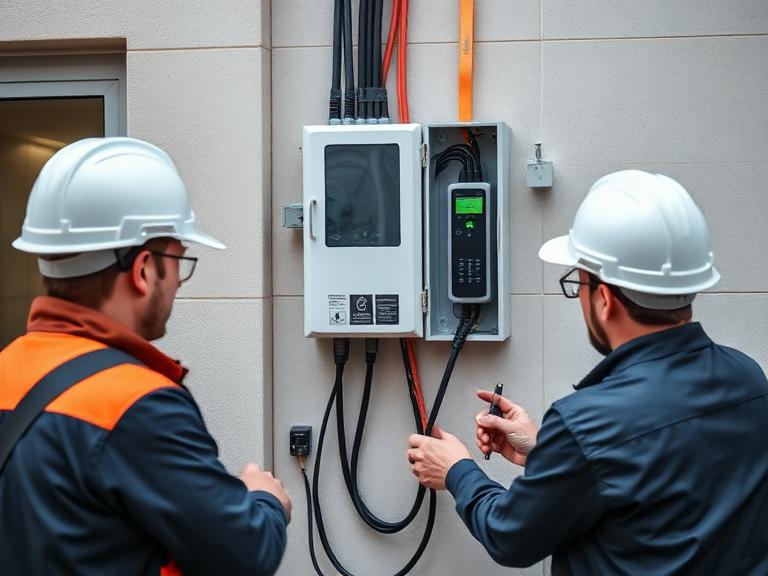
Cost Breakdown: Setting Up a Dual-Gun 120kW DC Fast Charging Station in Hyderabad
Understanding the capital outlay (CAPEX) is critical for commercial real estate developers, investors, and fleet operators. Below is a representative cost matrix for a 120kW Dual-Gun CCS2 DC Fast Charging Hub in Telangana:
| Cost Head | Item Description | Estimated Cost (INR in Lakhs) |
| EVSE Hardware | 120kW DC Fast Charger (Dual CCS2 Guns, OCPP 1.6J) | ₹9.50 – ₹12.00 Lakhs |
| Grid Power Infra | 160 kVA 11kV/415V Transformer, RMU, HT Metering Structure | ₹4.50 – ₹6.50 Lakhs |
| Electrical Distribution | LT Panel with MCCB, SPD, Cable Trays & Armored Cables | ₹2.00 – ₹3.20 Lakhs |
| Civil Works & Safety | Transformer Pad, Civil Trenches, Canopy, Fire Extinguishers | ₹1.80 – ₹2.50 Lakhs |
| Earthing & Protection | 6-Point Chemical Earthing Matrix & Lightning Arrestor | ₹0.60 – ₹0.90 Lakhs |
| Liaisoning & Statutory | TGSPDCL Fees, CEIG Inspection, Approval Documentation | ₹1.00 – ₹1.80 Lakhs |
| Software & Testing | CMS Setup, Networking, RFID Activation & Commissioning | ₹0.40 – ₹0.70 Lakhs |
| Total Estimated CAPEX | Turnkey Execution Cost (Excl. Land & Taxes) | ₹19.80 – ₹27.60 Lakhs |
Essential Considerations when Choosing an EPC Contractor in Telangana
Selecting the right engineering partner ensures grid safety, operational longevity, and seamless statutory compliance. Use this evaluation matrix when shortlisting firms:
+--------------------------------------------------------------------------------+
|                 EPC CONTRACTOR EVALUATION & SELECTION MATRIX                   |
+--------------------------------------------------------------------------------+
|  EVALUATION CRITERIA   | WEIGHT | KEY CHECKPOINTS                              |
+------------------------+--------+----------------------------------------------+
| Electrical Licensing   |  25%   | Class-A Electrical Contractor License issued |
|                        |        | by Telangana Licensing Board.                |
+------------------------+--------+----------------------------------------------+
| DISCOM & CEIG Liaison  |  20%   | Demonstrated track record with TGSPDCL/      |
|                        |        | TGNPDCL load approvals and CEIG clearances.  |
+------------------------+--------+----------------------------------------------+
| Turnkey Track Record   |  20%   | Number of commercial DC fast charging hubs   |
|                        |        | successfully energized in Telangana.          |
+------------------------+--------+----------------------------------------------+
| Hardware Neutrality    |  15%   | Ability to integrate leading OEM chargers    |
|                        |        | (ABB, Delta, Servotech, Exicom, etc.).       |
+------------------------+--------+----------------------------------------------+
| O&M & SLA Commitments  |  10%   | Local presence in Hyderabad/districts for    |
|                        |        | < 4-hour breakdown response time.            |
+------------------------+--------+----------------------------------------------+
| Solar + BESS Capability|  10%   | Expertise in hybrid solar-microgrid integrated|
|                        |        | EV charging setups.                          |
+--------------------------------------------------------------------------------+
15 Frequently Asked Questions (FAQs)
Q1: What is the primary role of an EV charging EPC contractor in Telangana?
Answer: An EV charging EPC (Engineering, Procurement, and Construction) contractor handles the complete end-to-end lifecycle of deploying charging infrastructure. This includes technical feasibility, single line diagram (SLD) engineering, procurement of chargers and transformers, civil foundations, cabling, DISCOM load sanctioning (TGSPDCL/TGNPDCL), CEIG safety approvals, and software setup.
Q2: Do I need a separate electrical meter for a commercial EV charging station in Hyderabad?
Answer: Yes. Telangana state guidelines require a dedicated EV charging tariff electricity meter issued by TGSPDCL or TGNPDCL. This guarantees that your charging station qualifies for state-prescribed preferential EV power tariffs rather than standard commercial tariff rates.
Q3: What licenses are mandatory for an EPC contractor to execute EV charging stations in Telangana?
Answer: The EPC contractor must possess a valid Class-A Electrical Contractor License issued by the Telangana State Electricity Licensing Board. Additionally, their engineers must be certified to handle High Tension (HT) equipment and liaise with the Chief Electrical Inspectorate to Government (CEIG).
Q4: How long does it take to install a 120kW DC fast charging station in Telangana?
Answer: The end-to-end process typically takes 45 to 90 days. Civil construction and cabling take about 2 to 3 weeks, while obtaining grid transformer approvals, DISCOM meter installation, and CEIG inspection clearances account for the remaining duration.
Q5: What role does TGREDCO play in setting up EV charging stations?
Answer: TGREDCO (Telangana Renewable Energy Development Corporation Ltd.) is the State Nodal Agency responsible for managing EV policies, organizing tenders for public charging hubs on government lands, coordinating subsidy frameworks, and maintaining the central registry of charging nodes in Telangana.
Q6: Can solar power be integrated with commercial EV charging stations?
Answer: Absolutely. Leading EPC contractors design hybrid systems where rooftop solar PV panels or solar carports are connected to the station’s LT distribution board alongside grid power. Combining solar generation with a Battery Energy Storage System (BESS) reduces peak DISCOM demand charges and lowers operational electricity costs.
Q7: What electrical safety features must an EPC contractor install?
Answer: An EPC contractor must integrate multiple protection layers, including residual current devices (RCD Type A/B), over-voltage and under-voltage protection, surge protection devices (SPD), emergency stop buttons, short-circuit protection, isolation transformers, and a dedicated earthing pit matrix with resistance under $1\,\Omega$.
Q8: What is the difference between TGSPDCL and TGNPDCL for EV station setup?
Answer: TGSPDCL covers southern districts including Hyderabad, Rangareddy, Medchal, and Nalgonda, whereas TGNPDCL covers northern districts like Warangal, Karimnagar, and Nizamabad. Your EPC contractor submits load sanction files to the specific DISCOM governing your site location.
Q9: Is CEIG approval mandatory for all EV charging installations?
Answer: CEIG (Chief Electrical Inspectorate to Government) approval is mandatory for all high-tension (HT) charging setups (connected at 11kV or above) and installations where the cumulative load exceeds 50 kW. Small residential/commercial AC chargers (< 15 kW) fed from existing low-tension (LT) lines generally do not require full CEIG inspection.
Q10: How much space is required for a commercial 4-wheeler DC charging hub?
Answer: A standard dual-bay DC fast charging station requires approximately 350 to 500 sq. ft. of space. This covers two dedicated vehicle parking bays, space for the DC charger cabinet, safety bollards, an electrical panel/transformer enclosure, and safe pedestrian pathways.
Q11: What software protocols should the charging equipment support?
Answer: The chargers supplied by your EPC contractor must support OCPP (Open Charge Point Protocol) 1.6J or 2.0.1. This open standard ensures your hardware can seamlessly connect to any Charge Point Management System (CMS) for user authentication, mobile app payments, dynamic pricing, and remote diagnostics.
Q12: How is transformer capacity calculated for an EV charging station?
Answer: Transformer capacity in kVA is calculated using the formula:
$$\text{Required kVA} = \frac{\text{Total Connected DC/AC Load (kW)}}{\text{Power Factor } (0.95) \times \text{Diversity Factor}}$$
For example, a 120 kW DC fast charger with $0.95$ power factor requires a minimum transformer rating of $\approx 135\text{ kVA}$. EPC contractors standardly install a 160 kVA step-down transformer to allow overhead for auxiliary loads.
Q13: Can EV charging stations be set up in residential apartments in Hyderabad?
Answer: Yes. EPC contractors install master-metered or individual-metered AC chargers in apartment basements. They implement Dynamic Load Management (DLM) systems to automatically adjust charging speed based on the apartment building’s real-time power consumption, avoiding transformer overloads.
Q14: What ongoing maintenance is required after EPC project handover?
Answer: EPC contractors offer Operation & Maintenance (O&M) contracts covering preventive maintenance (checking cable gun thermal sensors, tightening busbar connections, transformer oil filtration, cleaning air filters) and corrective maintenance with guaranteed Response/Repair SLAs (e.g., 4-hour on-site arrival).
Q15: What is the ROI timeline for a public EV charging hub on major highways like NH-65 or Hyderabad ORR?
Answer: Depending on utilization rates, land rental costs, and electricity tariffs, a highway DC fast charging station in Telangana typically achieves capital payback (ROI) within 2.5 to 4.5 years, assuming an average operational utilization of 15% to 25% per day.