
Table of Contents
EV Charging Setup Knowledge City Raidurg | Turnkey Commercial & Fleet Solutions
Knowledge City in Raidurg stands as the premier technology and financial district of Hyderabad. Housing Grade-A commercial towers, global capability centers (GCCs), innovation hubs like T-Hub and T-Works, luxury retail centers, and star-rated hotels, this ecosystem handles thousands of electric vehicles daily.
Implementing a robust EV charging setup in Knowledge City Raidurg requires far more than basic hardware installation. It demands enterprise-grade electrical engineering, specialized basement fire safety protocols, grid sanctioning with TGSPDCL (Southern Power Distribution Company of Telangana Limited), TGIIC compliance, and seamless cloud billing integration.
This guide details the end-to-end framework for establishing commercial, workplace, and fleet EV charging infrastructure tailored to the specific infrastructure requirements of Knowledge City, Raidurg.
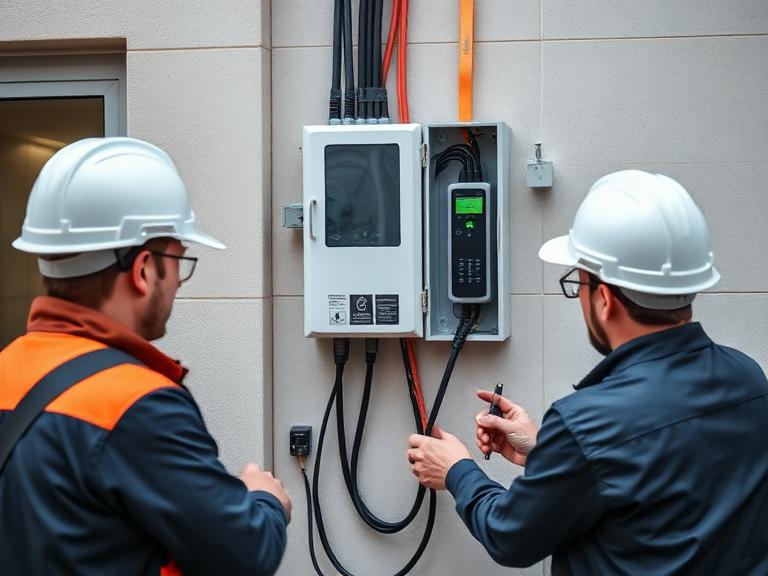
1. Executive Business Case: Why Knowledge City Raidurg Leads EV Infrastructure Demand
High-Density EV Adoption Hub
Knowledge City hosts thousands of tech professionals, corporate fleets, and premium private EVs (such as Tata Nexon EV, MG ZS EV, Hyundai Ioniq 5, BYD Seal, BMW iX, and Mercedes-Benz EQ series).
   [Knowledge City Raidurg EV Traffic Flow]
                     │
                     ├──► Corporate Employees (8–10 Hour Dwell Time: AC 7.4kW–22kW)
                     ├──► Executive Cabs & Fleets (30–60 Min Dwell Time: DC 60kW–120kW)
                     ├──► Visitors & Retail Shoppers (1–2 Hour Dwell Time: DC 30kW–60kW)
                     └──► Transit Corridors / Ikea–Raidurg ORR Link (Rapid DC 120kW–240kW)
Strategic Alignment with IGBC & LEED Platinum Standards
Grade-A commercial spaces in Raidurg prioritize Indian Green Building Council (IGBC) and LEED Platinum certifications. Deploying intelligent, solar-integrated EV charging bays contributes directly to ESG (Environmental, Social, and Governance) targets required by multinational corporate tenants.
Automated Revenue & Property Asset Valuation
Installing commercial EV charging stations transforms underutilized parking space into a profitable revenue stream. Facility managers can set customized profit markups over utility power tariffs, capturing value from both corporate employees and public retail visitors.
2. Technical Site Survey & Spatial Engineering in Knowledge City
Executing an EV charging setup within high-rise corporate towers or campus complexes requires a thorough technical audit before procuring hardware.
       ┌──────────────────────────────────────────────────────────┐
       │               SITE FEASIBILITY PROTOCOL                  │
       └────────────────────────────┬─────────────────────────────┘
                                    │
    ┌───────────────────────────────┼───────────────────────────────┐
    ▼                               ▼                               ▼
[1. Electrical Headroom]    [2. Cable Path & Basements]   [3. Thermal & Fire Safety]
• Measure DTR Transformer    • Trace B1 to B5 Risers       • LSZH Cable Specifications
• Check Main LT Breakers     • Voltage Drop Calculation    • BMS Trip Relay Integration
• Neutral-Earth Voltage <2V  • Mechanical Shielding         • Dedicated Smoke Detection
Electrical Headroom & Power Quality Audit
- Transformer Capacity Check: Assess available kVA capacity on the building’s Distribution Transformer (DTR).
- Harmonic Distortion & Neutral Earth Voltage: Verify that Total Harmonic Distortion (THD) remains below 5% and Neutral-to-Earth Voltage is held under $2\text{V}$ to prevent electronic trips in sensitive EV power modules.
- Peak Demand Mapping: Evaluate building load curves to ensure simultaneous charging sessions will not exceed sanctioned demand limits.
Basement vs. Surface Bay Spatial Planning
| Parameter | Multi-Level Basement Setup (B1–B5) | Surface / Ground Level Outdoor Setup |
| Primary Use Case | Employee long-dwell AC charging & executive parking | Public DC fast charging, fleet cabs, and visitor hubs |
| Cable Requirements | Heavy-duty Armored LSZH (Low Smoke Zero Halogen) | Armored XLPE underground cables in RCC trenches |
| Ingress Protection | IP54 / IP65 | IP65 / IK10 weather and impact resistant |
| Ventilation Needs | Forced mechanical exhaust & airflow management | Natural convection + shade canopy structures |
| Fire Safety | BMS integration, sprinkler heads, smoke detectors | CO2/DCP extinguishers, clear vehicle exit paths |
3. Hardware Architecture & Charger Selection Matrix
Selecting the appropriate mix of Alternating Current (AC) slow/fast chargers and Direct Current (DC) ultra-fast chargers depends directly on vehicle dwell times across Knowledge City properties.
                  HARDWARE DEPLOYMENT ARCHITECTURE
                  ────────────────────────────────

      Corporate Dwell Spaces                    High-Turnaround Transit
     (Dwell Time: 4 - 9 Hours)                 (Dwell Time: 20 - 45 Mins)
                 │                                         │
    ┌────────────┴────────────┐               ┌────────────┴────────────┐
    ▼                         ▼               ▼                         ▼
 AC 7.4kW - 11kW          AC 22kW           DC 60kW - 120kW         DC 180kW - 240kW
 Single-Phase           3-Phase Dual-Gun    Dual-Gun CCS2 Fast      Dual-Gun Heavy Duty
 (Employee Basements)   (Workplace/Visitor) (Hotels & Retail)       (Fleets & Public Hubs)
Commercial Charger Specifications Matrix
| Equipment Type | Input Power Rating | Connector Type | Target Charging Speed | Typical Knowledge City Location |
| Single-Gun Workplace AC | $7.4\text{kW}$ ($230\text{V}$, 1-Phase) | Type 2 AC | 40–50 km range per hour | Executive dedicated basement bays |
| Dual-Gun Commercial AC | $22\text{kW}$ ($415\text{V}$, 3-Phase) | Dual Type 2 AC | 100–110 km range per hour | Corporate IT park common basements |
| Compact Commercial DC | $30\text{kW}$–$60\text{kW}$ DC | CCS2 Dual Gun | 20% to 80% in 45–60 mins | Retail centers, fine dining, hotels |
| High-Power DC Fast Charger | $120\text{kW}$–$240\text{kW}$ DC | Dual CCS2 / Liquid Cooled | 20% to 80% in 15–25 mins | Public fast-charging hubs, corporate cabs |
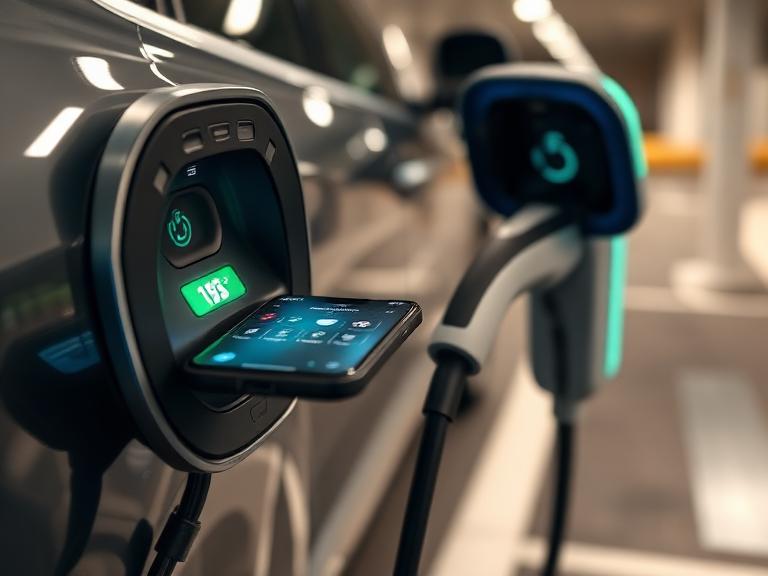
4. Electrical Design, Distribution & Protection Systems
Commercial EV charging setups in Knowledge City require dedicated electrical distribution networks isolated from general building lighting and HVAC loads.
       ┌──────────────────────────────────────────────────────────┐
       │             ELECTRICAL DISTRIBUTION FRAMEWORK            │
       └────────────────────────────┬─────────────────────────────┘
                                    │
  [TGSPDCL 11kV Grid] ──► [Step-Down Transformer] ──► [Main LT Breaker Panel]
                                                               │
                                  ┌────────────────────────────┴───────────────────────────┐
                                  ▼                                                        ▼
                    [Isolation MCCB Switchboard]                             [Sub-panel with Surge Protection]
                                  │                                                        │
                   ┌──────────────┴──────────────┐                           ┌─────────────┴─────────────┐
                   ▼                             ▼                           ▼                           ▼
         [120kW DC Fast Charger]        [60kW DC Fast Charger]         [22kW AC Dual-Gun]          [22kW AC Dual-Gun]
                   │                             │                           │                           │
          [Dedicated Earthing]          [Dedicated Earthing]        [Dedicated Earthing]        [Dedicated Earthing]
Electrical Line Sizing & Cable Drops
Cables must be sized to handle continuous full-load current without exceeding temperature thresholds or causing significant voltage drops across deep basement runs.
- Target Voltage Drop Limit: Below 3% across the entire cable run length.
$$V_{\text{drop}} = \frac{\sqrt{3} \times I \times L \times (R \cos\phi + X \sin\phi)}{1000} \le 3\%$$
Where:
- $I$ = Continuous operating current (Amperes)
- $L$ = Total one-way cable length (Meters)
- $R, X$ = Cable AC resistance and reactance per kilometer
- $\cos\phi$ = Power factor (typically 0.95–0.98 for modern EV converters)
Safety Protection Devices
- Molded Case Circuit Breakers (MCCB): Rated at 125% of maximum continuous current load, equipped with adjustable thermal-magnetic or micro-processor trip units.
- Type B Residual Current Circuit Breakers (RCCB): Mandatory for EV installations to detect both AC sinusoidal leakage and smooth DC earth leakage currents.
- Surge Protection Devices (SPD): Type 1 + Type 2 SPDs installed at primary sub-panels to safeguard sensitive onboard vehicle controllers and charger rectifiers from grid switching surges and lightning strikes.
- Chemical Gel Earthing Pits: Dedicated, maintenance-free copper/bonded earth pits delivering a measured resistance below $1.0\ \Omega$.
5. Regulatory Compliance & TGSPDCL Grid Approval Steps
Deploying a commercial charging setup in Knowledge City Raidurg requires strict adherence to Telangana state power regulations and local government bodies.
┌─────────────────────────────────────────────────────────────────────────────────┐
│                     REGULATORY APPROVAL & PERMIT TIMELINE                       │
└─────────────────────────────────────────────────────────────────────────────────┘
  Week 1                  Week 2                  Week 3                 Week 4
  ───┬───────────────────────┬───────────────────────┬──────────────────────┬───
     │                       │                       │                      │
     ▼                       ▼                       ▼                      ▼
[Site Survey & SLD]     [TGSPDCL Sanction]      [Civil, Cabling &]     [CEIG Inspection &]
[Engineering Design]    [Application Submission] [Panel Execution]      [Final Operational Rollout]
TGSPDCL Electricity Tariff Structure
TGSPDCL enforces a distinct utility tariff category specifically for Electric Vehicle Charging Stations, keeping operating expenses lower than standard commercial office rates.
                  TGSPDCL EV TARIFF STRUCTURE (APPROX)
                  ───────────────────────────────────

   Base Energy Tariff                 Time-of-Day (ToD) Adjustments
   ──────────────────                 ─────────────────────────────
   Base: ~₹6.00 - ₹7.50 / kWh    │── Peak Hours (06:00-10:00 & 18:00-22:00): +Higher Rate
                                      │── Off-Peak Hours (22:00 - 06:00): Discounted Rate
                                      └── Standard Hours: Base Energy Rate
Essential Statutory Clearances
- TGSPDCL Sanction Letter: Dedicated commercial load allocation for EV charging.
- CEIG Approval: Certification from the Chief Electrical Inspectorate to the Government for any installation exceeding $50\text{kW}$ total load capacity.
- TGIIC / Building Developer NOC: Formal approval from Telangana Industrial Infrastructure Corporation and property developers confirming structural and parking bay allocation.
6. Software Architecture: OCPP, CMS, and Enterprise Integration
Hardware represents only half of the EV charging equation. Managing access control, energy allocation, and automated financial billing requires a robust cloud platform.
       ┌──────────────────────────────────────────────────────────┐
       │             CHARGER MANAGEMENT SYSTEM (CMS)              │
       └────────────────────────────┬─────────────────────────────┘
                                    │
     ┌──────────────────────────────┼──────────────────────────────┐
     ▼                              ▼                              ▼
[OCPP 1.6J / 2.0.1 Protocol]  [Enterprise Access Control]    [Smart Energy Management]
• Universal Hardware Sync     • Employee RFID / SSO Sync      • Dynamic Power Balancing
• Remote Diagnostics & OTA    • App Payment Gateways          • Peak Load Shaving
• Real-time Uptime Alerts     • Corporate Expense Billing     • Solar Microgrid Balancing
The Role of Open Charge Point Protocol (OCPP)
All installed chargers must run on OCPP 1.6J or OCPP 2.0.1. This open communication standard ensures complete interoperability, allowing facility managers to change software vendors or payment platforms without replacing physical chargers.
Corporate & Commercial Software Capabilities
- Single Sign-On (SSO) & RFID Integration: Enables employees to start charging sessions using corporate ID badges or white-listed email accounts.
- Dynamic Load Management (DLM): Automatically balances power distribution across multiple connected vehicles when building demand peaks, preventing grid penalty charges.
- Automated Payments: Integrated payment gateways process UPI, credit cards, and corporate account billing, sending digital GST receipts instantly.
7. Monetization Models for Knowledge City Landlords & IT Parks
Property owners and facility managers in Knowledge City Raidurg can choose from several commercial operation models:
  ┌──────────────────────────────────────────────────────────────────────────┐
  │                   COMMERCIAL OPERATION ARCHITECTURES                     │
  └──────────────────────────────────────────────────────────────────────────┘

   1. CAPEX Model (Owner Owned & Operated)
   ┌────────────────────────────────────────────────────────────────────────┐
   │ Facility Owner Purchases Equipment ──► Retains 100% Session Revenue     │
   └────────────────────────────────────────────────────────────────────────┘

   2. OPEX / CPO Model (Third-Party Managed)
   ┌────────────────────────────────────────────────────────────────────────┐
   │ CPO Supplies Hardware & Maintenance ──► Pays Host Revenue Share / Rent  │
   └────────────────────────────────────────────────────────────────────────┘

   3. Subsidized Corporate Model (Employee Perk)
   ┌────────────────────────────────────────────────────────────────────────┐
   │ Free / Discounted AC Charging for Staff ──► Public Paid Rates Off-Hours  │
   └────────────────────────────────────────────────────────────────────────┘
CAPEX vs. OPEX Analysis
CAPEX (Fully Owned Infrastructure)
- Investment: The building owner or developer funds hardware, cabling, civil construction, and installation upfront.
- Returns: Retains 100% of profit margins from every kilowatt-hour sold.
- Best For: Grade-A IT parks and commercial towers seeking long-term revenue and full control over user experience.
OPEX / CPO-Led Installation
- Investment: A third-party Charge Point Operator (CPO) installs hardware and covers operational costs.
- Returns: The building host earns a fixed monthly land lease or a percentage-based revenue share.
- Best For: Property owners wanting to offer EV charging amenities with zero capital outlay and no operational maintenance responsibilities.
8. Step-by-Step Execution Workflow
Executing an EV charging setup in Knowledge City follows a structured, step-by-step path:
- On-Site Feasibility & Infrastructure Audit
- Inspect electrical panels, transformer capacity, basement layout, and cable routing paths from B1–B5.
- Single Line Diagram (SLD) & Load Calculation
- Draft detailed electrical engineering schematics and submit load applications to TGSPDCL.
- Civil Works & Pedestal Construction
- Pour reinforced concrete pedestals ($300\text{mm}+$ above floor level) and cut, trench, or mount cable trays along basement ceilings.
- Panel Assembly, Cabling & Earthing Execution
- Install dedicated MCCBs, Type B RCCBs, SPDs, and run fire-retardant LSZH armored cables. Sink chemical gel earth pits to achieve sub-$1.0\ \Omega$ resistance.
- Hardware Mounting & Termination
- Secure AC wallboxes or anchor DC fast chargers to concrete pads. Terminate high-voltage power leads and communication lines (Ethernet/4G).
- CMS Configuration & Network Onboarding
- Link chargers to cloud management software using OCPP. Configure corporate RFID access lists, dynamic tariffs, and payment gateways.
- Safety Inspections & Official CEIG Commissioning
- Perform insulation tests, ground loop impedance checks, and live load testing. Secure final CEIG clearance and hand over operational documentation.
9. Fire Safety, Operations & Maintenance Controls
Operating high-power EV charging infrastructure inside densely populated commercial towers requires continuous maintenance and strict safety compliance.
       ┌──────────────────────────────────────────────────────────┐
       │                ROUTINE MAINTENANCE PROTOCOL              │
       └────────────────────────────┬─────────────────────────────┘
                                    │
     ┌──────────────────────────────┼──────────────────────────────┐
     ▼                              ▼                              ▼
[Monthly Checks]            [Quarterly Diagnostics]       [Annual Overhauls]
• Inspect Guns & Cables     • Infrared Thermal Scans      • Measure Earth Pit Resistance
• Test Emergency Buttons    • Verify RCCB Leakage Trips   • Replace DC Cabinet Air Filters
• Clean Ventilation Louvers • Check Cable Latching Pins   • Complete Firmware Upgrades
Specialized Basement Fire Protection
- Low-Smoke Zero-Halogen (LSZH) Wiring: Ensures cables do not release toxic halogen gases or dense smoke during a thermal event.
- Automatic Emergency Trip Integration: Connects charger isolation breakers directly to the central Building Management System (BMS) to cut power instantly if smoke or flame sensors trigger.
- Clear Equipment Separation: Maintains at least $1.2\text{ m}$ of clear space between vehicle charging bays, ensuring easy firefighter access.
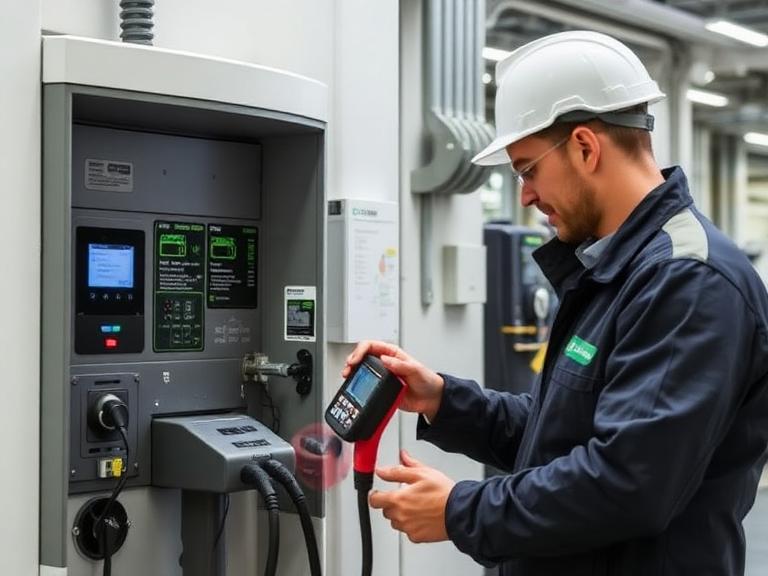
10. Frequently Asked Questions (15 Detailed FAQs)
Q1: What is the total cost of setting up EV charging stations in Knowledge City Raidurg?
Answer: Setup costs depend on equipment specifications and physical site conditions:
- Workplace AC Dual-Gun (7.4kW–22kW): ₹70,000 to ₹1,80,000 per charger (excluding extended cable tray runs).
- Commercial DC Fast Chargers (60kW–120kW): ₹4,50,000 to ₹12,50,000 per unit.
- High-Power Ultra-Fast DC Chargers (180kW–240kW): ₹15,00,000 to ₹25,00,000+, depending on transformer requirements, civil foundations, and TGSPDCL line extensions.
Q2: How long does a turnkey commercial EV charging setup take in Raidurg Knowledge City?
Answer: On-site execution—including civil works, tray mounting, cabling, and panel fitting—takes 4 to 8 working days. Acquiring TGSPDCL commercial load sanctioning, TGIIC clearances, and CEIG certification takes approximately 2 to 4 weeks.
Q3: What statutory approvals are mandatory for enterprise EV charging in Knowledge City?
Answer: Essential requirements include:
- TGSPDCL Load Sanction: Dedicated commercial approval for EV power demand.
- CEIG Safety Inspection: Required for high-voltage setups exceeding $50\text{kW}$.
- TGIIC / Property Developer NOC: Official permission to modify shared electrical infrastructure and dedicate parking bays.
- Fire Safety Certification: Clearances confirming adequate suppression equipment and unhindered emergency vehicle access.
Q4: What electricity rate does TGSPDCL charge for commercial EV stations in Raidurg?
Answer: TGSPDCL applies a dedicated EV utility tariff designed to promote electric mobility. The base energy rate typically ranges between ₹6.00 and ₹7.50 per kWh, plus Time-of-Day (ToD) billing adjustments, state duties, and fixed demand charges. This dedicated rate is significantly lower than standard commercial building electricity tariffs.
Q5: Do high-power DC fast chargers require a dedicated transformer in Knowledge City towers?
Answer: Yes. Installing high-power DC fast chargers (60kW to 240kW) usually requires a dedicated $11\text{kV}/415\text{V}$ step-down transformer and low-tension panel. This prevents electrical unbalance and protects the main building transformer from heavy charging demand surges.
Q6: How can IT park management monetize EV charging stations and accept automated payments?
Answer: Monetization is automated using an OCPP-compliant Charger Management System (CMS). Users scan a QR code on the charger or use a mobile app to start charging. The platform processes payments via UPI, credit/debit cards, or corporate accounts, allowing facility managers to set custom pricing per kWh or per minute.
Q7: What is the main difference between AC Level 2 chargers and DC Fast Chargers?
Answer:
- AC Level 2 Chargers (7.4kW–22kW): Supply AC power directly to the vehicle’s onboard converter. Full charging takes 4 to 8 hours, making them ideal for employee parking decks.
- DC Fast Chargers (60kW–240kW): Convert power to high-voltage DC off-board and supply energy directly to the vehicle battery, enabling an 80% charge in 20 to 40 minutes. These serve short-dwell visitors, cabs, and fleet operations.
Q8: Are there state incentives supporting commercial EV setups in Knowledge City?
Answer: Yes. Under the Telangana EV & Energy Storage Policy, commercial setups benefit from single-window regulatory clearances via TGREDCO/TGIIC, dedicated utility tariff structures, and road tax exemptions for registered commercial EV fleets.
Q9: Why is OCPP protocol compliance necessary when selecting commercial chargers?
Answer: OCPP (Open Charge Point Protocol) ensures complete interoperability between hardware and cloud software. Installing OCPP-compliant chargers prevents vendor lock-in, allowing property managers to switch software vendors or payment platforms without replacing physical hardware.
Q10: What routine maintenance is required for EV charging stations in commercial towers?
Answer: Essential maintenance includes:
- Monthly checks of charging cables, guns, and connector latches.
- Quarterly infrared thermal imaging of electrical breakers and cable connections.
- Annual earth resistance testing on gel chemical pits to keep ground levels below $1.0\ \Omega$.
- Cleaning dust filters on air-cooled DC fast-charging cabinets.
- Regular over-the-air (OTA) software and firmware updates.
Q11: How do you handle fire safety for EV chargers in multi-level basement parking (B1–B5)?
Answer: Basement safety measures include:
- Using Low-Smoke Zero-Halogen (LSZH) armored cabling to prevent toxic fumes during a fire.
- Interlocking main breaker trip circuits directly with the Building Management System (BMS) and fire alarms.
- Installing heat/smoke detectors directly above every charging bay.
- Ensuring clear access paths and placing CO2/DCP fire extinguishers nearby.
Q12: Can corporate companies restrict charger access exclusively to verified employees?
Answer: Yes. Enterprise CMS platforms support restricted access control through corporate RFID badges, white-listed app accounts, or direct Single Sign-On (SSO) integration with company HR systems.
Q13: How is ROI calculated for a commercial EV charging setup in Knowledge City Raidurg?
Answer: ROI is calculated using the net margin per kWh delivered:
$$\text{Margin per kWh} = \text{Retail Charging Rate} – (\text{TGSPDCL Base Rate} + \text{Software/Maintenance Overhead})$$
$$\text{Payback Period (Months)} = \frac{\text{Total Initial CAPEX}}{\text{Daily Energy Consumption (kWh)} \times \text{Margin per kWh} \times 30}$$
Average payback timelines range from 18 to 36 months, depending on daily charger utilization rates.
Q14: How much physical space and cable length are required for commercial charging bays?
Answer: Each dual-gun charger typically serves two adjacent parking bays. Allocate approximately $1.5\text{ m} \times 1.5\text{ m}$ for concrete mounting pads and protective bollards. Charging cables should be 5 to 7.5 meters long to easily reach vehicle charging ports regardless of parking orientation.
Q15: Can rooftop solar systems be integrated with EV setups in Knowledge City?
Answer: Yes. Integrating rooftop solar PV arrays or solar carports creates an eco-friendly microgrid setup. Solar power offsets peak grid demand from TGSPDCL during daytime hours, lowers operating energy costs, and helps earn valuable LEED/IGBC Platinum points for green building accreditation.
11. Strategic Action Plan for Property Managers
Establishing a high-performance EV charging setup in Knowledge City Raidurg equips commercial towers with future-ready infrastructure, satisfies tenant ESG criteria, and unlocks recurring commercial revenues.