
Table of Contents
Pregnancy Thyroid Care in Vizag | Expert Maternal Endocrine Care
Accessing specialized Pregnancy Thyroid Care in Vizag is an indispensable component of modern maternal-fetal medicine. The thyroid gland plays a pivotal role in regulating maternal metabolism, systemic vascular resistance, placental development, and—most crucially—early fetal neurodevelopment. Because the human fetus depends entirely on maternal thyroid hormones ($T_4$ and $T_3$) transferred across the placenta during the first trimester, unmanaged maternal thyroid dysfunction poses severe risks, including congenital cognitive deficits, spontaneous pregnancy loss, gestational hypertension, low birth weight, and premature delivery.
In Visakhapatnam (Vizag), environmental dietary factors, coastal humidity, genetic predispositions toward autoimmune thyroiditis (Hashimoto’s disease), and rising incidences of subclinical hypothyroidism among South Asian women make continuous endocrine surveillance necessary. From central medical complexes along Maharani Peta (near KGH Clock Tower), Jagadamba Junction, Siripuram, Ram Nagar, and MVP Colony to tertiary healthcare hubs in Health City Arilova, Sheela Nagar, Madhurawada, and Gajuwaka, expectant mothers in Vizag have access to advanced endocrinologists, NABL-accredited diagnostic laboratories, and fetal medicine units.
This comprehensive, long-form clinical guide covers everything you need to know about pregnancy thyroid care across Visakhapatnam—including pregnancy-specific TSH trimester benchmarks, management of hypothyroidism and hyperthyroidism, medication safety protocols, dietary micronutrients, localized cost structures, a selection checklist, 15 detailed FAQs, and validated JSON-LD schema markup.
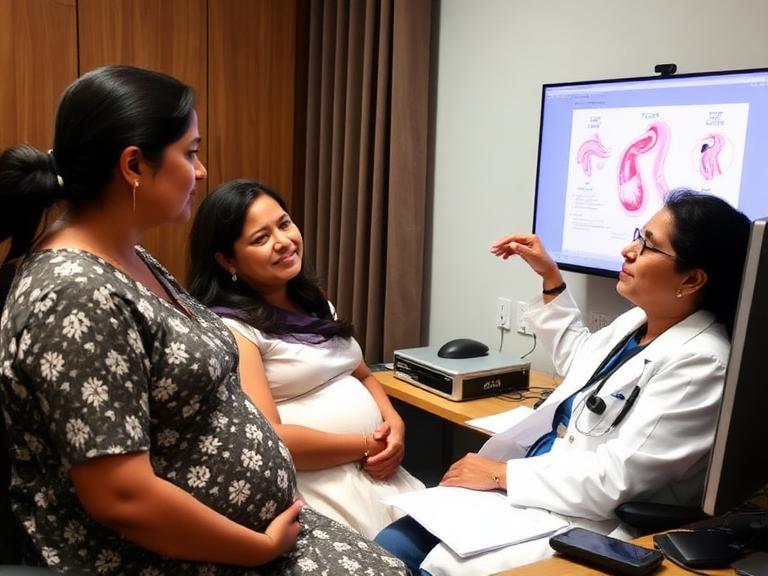
1. Physiological Alterations of the Thyroid Axis During Pregnancy
Pregnancy induces profound physiological changes in maternal endocrine function. Understanding these changes helps distinguish normal pregnancy-related adaptations from true thyroid disease.
            Maternal-Fetal Thyroid Axis Adaptation
 ┌────────────────────────────────────────────────────────────────────────┐
 │ 1. Human Chorionic Gonadotropin (hCG) Surge (Weeks 8–12)               │
 │    - hCG structurally mirrors TSH ──► Weakly stimulates Thyroid Gland │
 │    - Triggers transient drop in serum TSH & mild rise in Free T4       │
 ├────────────────────────────────────────────────────────────────────────┤
 │ 2. Estrogen-Mediated Expansion of Thyroid-Binding Globulin (TBG)       │
 │    - Serum TBG doubles ──► Increases Total T4 & Total T3 pools         │
 ├────────────────────────────────────────────────────────────────────────┤
 │ 3. Increased Renal Clearance of Iodide                                  │
 │    - Glomerular filtration increases ──► Higher dietary iodine needs   │
 ├────────────────────────────────────────────────────────────────────────┤
 │ 4. Onset of Fetal Thyroid Function (Weeks 12–14)                        │
 │    - Fetus depends entirely on maternal T4 prior to Week 12            │
 └────────────────────────────────────────────────────────────────────────┘
Key Physiological Adaptations
- hCG Cross-Reactivity: Human Chorionic Gonadotropin (hCG) shares a common alpha-subunit with Thyroid-Stimulating Hormone (TSH). During the first trimester peak (Weeks 8–12), high hCG levels stimulate thyroid hormone production, causing a physiological suppression of maternal serum TSH.
- Expansion of Thyroxine-Binding Globulin (TBG): Estrogen surges stimulate hepatic synthesis of TBG while slowing its clearance. This doubles total circulating $T_4$ and $T_3$ levels. Consequently, measuring Free $T_4$ ($FT_4$) and Free $T_3$ ($FT_3$)—rather than total hormone levels—is necessary to evaluate thyroid status during pregnancy accurately.
- Placental Deiodinase Activity: The placenta expresses Type 3 deiodinase ($\text{D3}$), an enzyme that inactivates maternal $T_4$ into reverse $T_3$ ($\text{rT}_3$). This enzymatic barrier regulates the exact amount of active thyroxine delivered to the developing baby.
2. Pregnancy-Specific TSH Reference Ranges & Anti-TPO Profiling
Using non-pregnant reference ranges for Thyroid-Stimulating Hormone (TSH) during pregnancy leads to underdiagnosis of hypothyroidism or misdiagnosis of hyperthyroidism. Specialized clinics in Vizag adhere to trimester-specific reference ranges established by the American Thyroid Association (ATA) and the Endocrine Society of India.
               Trimester-Specific TSH Target Ranges
 ┌────────────────────────────────────────────────────────────────────────┐
 │ • First Trimester  (Weeks 1 to 12)   : 0.1 to 2.5 mIU/L (Upper: 2.5)│
 │ • Second Trimester (Weeks 13 to 27)  : 0.2 to 3.0 mIU/L (Upper: 3.0)│
 │ • Third Trimester  (Weeks 28 to 40+) : 0.3 to 3.0 mIU/L (Upper: 3.0)│
 └────────────────────────────────────────────────────────────────────────┘
Note: If a laboratory in Vizag has established its own population-validated pregnancy reference ranges using automated immunoassay platforms, those local ranges take precedence.
Clinical Value of Anti-Thyroid Peroxidase (Anti-TPO) Antibody Testing
Testing for Anti-TPO antibodies identifies underlying autoimmune thyroiditis (Hashimoto’s disease).
- Positive Anti-TPO Status: Women who test positive for Anti-TPO antibodies face a significantly higher risk of progression from subclinical to overt hypothyroidism, recurrent pregnancy loss, placental abruption, and postpartum thyroiditis.
- Targeted Intervention: If TSH is between $2.5\text{ and }10.0\text{ mIU/L}$ in an Anti-TPO positive pregnant woman, immediate Levothyroxine therapy is recommended to safeguard the pregnancy.
3. Hypothyroidism in Pregnancy: Overt vs. Subclinical Management
Hypothyroidism is the most common thyroid disorder encountered during pregnancy, affecting up to 3% to 5% of gestations in India.
                 Hypothyroidism Classification & Management
 ┌────────────────────────────────────────────────────────────────────────┐
 │ Overt Hypothyroidism       : Elevated TSH + Low Free T4                │
 │                              OR TSH ≥ 10.0 mIU/L (Regardless of FT4)  │
 ├────────────────────────────────────────────────────────────────────────┤
 │ Subclinical Hypothyroidism : Elevated TSH (2.5–10.0 mIU/L)             │
 │                              WITH Normal Free T4                       │
 └────────────────────────────────────────────────────────────────────────┘
Maternal and Fetal Risks of Untreated Hypothyroidism
- Fetal Risks: Impaired fetal brain development and lower IQ scores, intrauterine growth restriction (IUGR), low birth weight, and increased perinatal mortality.
- Maternal Risks: Spontaneous abortion, gestational hypertension, preeclampsia, placental abruption, and severe postpartum hemorrhage (PPH).
Pharmacological Protocol: Levothyroxine ($\text{L-T}_4$) Titration
Levothyroxine (synthetic $T_4$) is the gold-standard treatment for maternal hypothyroidism. It is completely safe and identical to natural human thyroxine.
                Levothyroxine Administration Rules
 ┌────────────────────────────────────────────────────────────────────────┐
 │ 1. Dosage Calculation : 1.6 to 2.0 mcg/kg/day for overt cases         │
 │ 2. Pre-Existing Dose  : Increase baseline dose by 25%–30% immediately   │
 │                         upon confirming pregnancy                     │
 │ 3. Morning Routine    : Take on an empty stomach with water 30–60 min │
 │                         before breakfast                              │
 │ 4. Separation Rule    : Keep 4 hours apart from Iron, Calcium, and    │
 │                         Antacids to prevent absorption failure        │
 └────────────────────────────────────────────────────────────────────────┘
- Monitoring Frequency: Serum TSH and $FT_4$ levels must be retested every 4 weeks during the first half of pregnancy (up to Week 20), and at least once between Weeks 26 and 32, adjusting the Levothyroxine dose after each test.

4. Hyperthyroidism & Gestational Transient Thyrotoxicosis
Hyperthyroidism occurs in approximately 0.2% to 0.4% of pregnancies. Differentiating autoimmune Graves’ Disease from non-autoimmune Gestational Transient Thyrotoxicosis (GTT) is critical, as their treatments differ fundamentally.
                  Differential Diagnosis of Elevated FT4
 ┌────────────────────────────────────────────────────────────────────────┐
 │ Gestational Transient Thyrotoxicosis (GTT)                             │
 │ • Caused by high hCG levels; associated with Hyperemesis Gravidarum    │
 │ • Self-limiting; resolves by Weeks 14–18                              │
 │ • Anti-TPO / TRAb Negative ──► NO Antithyroid Drugs Needed            │
 ├────────────────────────────────────────────────────────────────────────┤
 │ Overt Graves' Disease                                                  │
 │ • Autoimmune activation of TSH receptors by TRAb antibodies           │
 │ • Features goiter, ophthalmopathy, and persistent symptoms             │
 │ • Requires Antithyroid Drug (ATD) Therapy                              │
 └────────────────────────────────────────────────────────────────────────┘
Pharmacological Protocol for Graves’ Disease During Pregnancy
Antithyroid drugs (ATDs) cross the placenta, requiring careful dose titration to maintain maternal $FT_4$ in the upper-normal range using the lowest possible dose.
               Antithyroid Drug (ATD) Trimester Switching
 ┌────────────────────────────────────────────────────────────────────────┐
 │ First Trimester (Weeks 1 to 12)   : Propylthiouracil (PTU)             │
 │ - Minimizes risk of embryopathy (aplasia cutis / choanal atresia)     │
 ├────────────────────────────────────────────────────────────────────────┤
 │ Second & Third Trimesters (Wk 13+) : Methimazole (MMI) or Carbimazole │
 │ - Protects maternal liver from PTU-induced severe hepatotoxicity       │
 └────────────────────────────────────────────────────────────────────────┘
- Fetal Surveillance in Graves’ Disease: TSH Receptor Antibodies ($\text{TRAb}$) cross the placenta during the second trimester. If maternal $\text{TRAb}$ levels exceed 3 times the upper limit of normal, serial fetal ultrasound scans are required to monitor for fetal hyperthyroidism, fetal goiter, tachycardia ($> 160\text{ bpm}$), and growth restriction.
5. Postpartum Thyroiditis (PPT) & Long-Term Recovery
Postpartum Thyroiditis (PPT) is an autoimmune inflammation of the thyroid gland occurring within the first 12 months after delivery, affecting 5% to 10% of women. It is particularly common in women who tested positive for Anti-TPO antibodies during pregnancy.
                    Classic Biphasic PPT Course
 ┌────────────────────────────────────────────────────────────────────────┐
 │ Phase 1: Thyrotoxic Phase (1 to 4 Months Postpartum)                   │
 │ • Destruction-induced release of stored hormones                       │
 │ • Symptoms: Anxiety, palpitations, weight loss, heat intolerance       │
 │ • Treatment: Beta-blockers (Propranolol) for symptoms; NO ATDs        │
 ├────────────────────────────────────────────────────────────────────────┤
 │ Phase 2: Hypothyroid Phase (4 to 8 Months Postpartum)                  │
 │ • Depleted gland stores lead to temporary hormone deficiency           │
 │ • Symptoms: Fatigue, weight gain, depression, low milk supply          │
 │ • Treatment: Temporary Levothyroxine therapy                           │
 └────────────────────────────────────────────────────────────────────────┘
- Long-Term Risk: While PPT resolves spontaneously in most women within 12 months, roughly 20% to 30% go on to develop permanent primary hypothyroidism, requiring lifelong Levothyroxine therapy and annual TSH checks.
6. Dietary & Micronutrient Management for Thyroid Health
Nutritional planning works alongside medication to support thyroid function during pregnancy.
               Essential Thyroid Micronutrients
 ┌────────────────────────────────────────────────────────────────────────┐
 │ • Iodine    : 250 mcg Daily Target (Essential for T4/T3 synthesis)     │
 │ • Selenium  : 60 to 70 mcg Daily (Reduces Anti-TPO inflammatory response)│
 │ • Iron      : Treats anemia; must be spaced 4 Hours away from L-T4    │
 └────────────────────────────────────────────────────────────────────────┘
- Iodine Requirements: The World Health Organization (WHO) recommends an iodine intake of $250\,\mu\text{g}$ daily during pregnancy and lactation. This is easily met by using iodized salt in cooking alongside prenatal vitamins containing potassium iodide.
- Handling Goitrogenic Foods: Vegetables like cabbage, cauliflower, broccoli, and kale contain goitrogens that can interfere with iodine uptake if eaten raw in large amounts. Cooking or boiling these vegetables inactivates goitrogenic compounds, making them safe to eat.
7. Key Healthcare Corridors & Specialty Centers in Vizag
Visakhapatnam offers well-connected healthcare corridors featuring endocrinologists, high-risk obstetricians, and advanced diagnostic labs:
               Thyroid Specialty Hubs Across Visakhapatnam
 ┌────────────────────────────────────────────────────────────────────────┐
 │ Central Region : Maharani Peta, KGH Clock Tower, Ram Nagar, MVP        │
 │ North Region   : Health City Arilova, PM Palem, Madhurawada            │
 │ South/West Zone: Sheela Nagar, Gajuwaka, Seethammadhara                │
 └────────────────────────────────────────────────────────────────────────┘
- Central Medical Belt (Maharani Peta, KGH Clock Tower, Ram Nagar, MVP Colony): Features major endocrine hubs, including Hormone India Diabetes & Endocrine Clinic (Sarojini Naidu Tower, Maharani Peta, featuring Dr. G. Sri Harsha), Visakha Diabetes & Endocrine Centre (KGH Down Road), Endocare Hospital, Omni RK Hospital (Ram Nagar), Care Hospitals (Ram Nagar), and Advanced Centre Endocrinology (MVP Colony).
- North Suburban Belt (Health City Arilova, PM Palem, Madhurawada): Home to tertiary multi-specialty centers such as Apollo Hospitals Health City (Arilova, featuring specialists like Dr. Ramya Varada), MGM SevenHills Hospital (Arilova), Rainbow Children’s Hospital & BirthRight, and Vedanta Women & Children’s Hospital.
- South & Industrial Belt (Sheela Nagar, Gajuwaka, Seethammadhara): Serves residential and industrial communities through institutions like KIMS Hospitals (Seethammadhara), KIMS Cuddles (Sheela Nagar), and local outpatient specialty clinics.
8. Estimated Cost Structure for Pregnancy Thyroid Services in Vizag
Clear pricing details help families plan for consultation, laboratory diagnostic, and prescription expenses throughout pregnancy.
Estimated Cost Breakdown Across Visakhapatnam
| Diagnostic / Specialty Service Component | Standalone Diagnostic Lab / Clinic | Tertiary / Corporate Hospital |
| Endocrinologist Consultation Fee (Per Visit) | ₹400 – ₹700 | ₹700 – ₹1,200 |
| Comprehensive Pregnancy Thyroid Profile ($FT_3, FT_4, \text{TSH}$) | ₹500 – ₹900 | ₹900 – ₹1,600 |
| Anti-TPO Antibody Test | ₹700 – ₹1,200 | ₹1,200 – ₹2,000 |
| TRAb (TSH Receptor Antibody) Test | ₹1,800 – ₹2,800 | ₹2,800 – ₹4,200 |
| High-Resolution Thyroid Ultrasound (USG) | ₹800 – ₹1,400 | ₹1,400 – ₹2,500 |
| Fetal Color Doppler Growth Ultrasound | ₹1,500 – ₹2,500 | ₹2,500 – ₹4,200 |
| Monthly Levothyroxine ($\text{L-T}_4$) Medication Supply | ₹100 – ₹250 | ₹100 – ₹250 |
| Monthly Propylthiouracil / Methimazole Supply | ₹300 – ₹600 | ₹300 – ₹600 |
9. Practical Evaluation Checklist for Expectant Mothers
Use this checklist when selecting a provider for pregnancy thyroid care in Visakhapatnam:
                  Thyroid Provider Selection Checklist
 ┌────────────────────────────────────────────────────────────────────────┐
 │ [ ] Specialist holds DM / DNB Certification in Endocrinology           │
 │ [ ] Uses Trimester-Specific TSH Reference Ranges                       │
 │ [ ] Direct Communication Protocols with Your Primary Obstetrician      │
 │ [ ] On-Site NABL-Accredited Lab for Rapid TSH & Free T4 Turnaround      │
 │ [ ] Experienced in Handling Graves' Disease & Anti-TPO Autoimmunity    │
 │ [ ] Transparent Package Pricing & Cashless Health Insurance Support    │
 └────────────────────────────────────────────────────────────────────────┘
10. Frequently Asked Questions (FAQs)
Q1: What is the ideal TSH level during the first trimester of pregnancy?
In accordance with international endocrine guidelines, the target serum TSH level during the first trimester should ideally be maintained between 0.1 and 2.5 mIU/L. If local laboratory trimester ranges are unavailable, $2.5\text{ mIU/L}$ serves as the standard upper safety cutoff.
Q2: Why is thyroid hormone crucial during the first 12 weeks of pregnancy?
During the first 12 weeks of gestation, the fetal thyroid gland has not yet developed. The developing baby depends entirely on the maternal transfer of thyroxine ($T_4$) across the placenta for brain cell migration, neural tube growth, and cognitive development.
Q3: Is Levothyroxine safe to take during pregnancy?
Yes, Levothyroxine is completely safe. It is a synthetic form of natural human thyroxine ($T_4$). Taking your prescribed dose restores your hormone levels to normal, protecting both maternal health and fetal brain development without adverse side effects.
Q4: How should I take my Levothyroxine medication in the morning?
Take Levothyroxine on an empty stomach with plain water first thing in the morning, 30 to 60 minutes before eating breakfast or drinking tea/coffee. Avoid taking iron supplements, calcium tablets, or antacids within 4 hours, as they bind to the medication and prevent proper absorption.
Q5: How often should TSH levels be tested during a hypothyroid pregnancy?
TSH and Free $T_4$ levels should be retested every 4 weeks during the first half of pregnancy (up to Week 20), as expanding plasma volume and rising estrogen levels require periodic dose adjustments. Between Weeks 20 and 40, testing is typically repeated every 6 to 8 weeks unless symptoms arise.
Q6: What should I do with my Levothyroxine dose as soon as I confirm my pregnancy test?
If you are already taking Levothyroxine for pre-existing hypothyroidism, contact your endocrinologist immediately upon confirming a positive home pregnancy test. Current guidelines recommend increasing your baseline dosage by 25% to 30% (often by taking two extra weekly doses) to meet immediate gestational demands.
Q7: What is the difference between overt hypothyroidism and subclinical hypothyroidism?
- Overt Hypothyroidism: TSH is elevated above target ranges AND Free $T_4$ is below normal (or TSH is $\ge 10.0\text{ mIU/L}$). It carries significant clinical risks and requires immediate treatment.
- Subclinical Hypothyroidism: TSH is mildly elevated ($2.5\text{ to }10.0\text{ mIU/L}$), but Free $T_4$ remains within normal limits. Treatment decisions depend on your Anti-TPO antibody status.
Q8: What does a positive Anti-TPO antibody test mean for a pregnant woman?
A positive Anti-TPO test indicates an underlying autoimmune thyroid disease (Hashimoto’s thyroiditis). It means your immune system is producing antibodies against your thyroid gland, raising the risk of developing clinical hypothyroidism, miscarriage, or postpartum thyroiditis.
Q9: What is Gestational Transient Thyrotoxicosis (GTT), and does it require antithyroid medication?
Gestational Transient Thyrotoxicosis is a temporary condition caused by high hCG levels during the first trimester, often accompanied by severe morning sickness (Hyperemesis Gravidarum). Because it is self-limiting and resolves naturally by Weeks 14–18, it does not require antithyroid medications—only supportive care and rehydration.
Q10: How is Graves’ disease treated during pregnancy?
Graves’ disease is treated using antithyroid drugs (ATDs). Propylthiouracil (PTU) is used during the first trimester to minimize embryopathy risks. At the start of the second trimester (Week 13), treatment is typically switched to Methimazole (MMI) to avoid PTU-related liver toxicity.
Q11: What is Postpartum Thyroiditis (PPT), and what are its symptoms?
Postpartum Thyroiditis is an autoimmune inflammation of the thyroid occurring within 12 months after delivery. It typically follows a biphasic pattern: a hyperthyroid phase (anxiety, weight loss, heart palpitations) lasting 1 to 3 months, followed by a hypothyroid phase (fatigue, weight gain, depression, low milk production) lasting 4 to 8 months.
Q12: Can hypothyroidism affect my breast milk supply after delivery?
Yes. Thyroid hormones play a key role in supporting prolactin function and milk synthesis. Uncorrected hypothyroidism during the postpartum period can lead to low breast milk supply. Normalizing TSH levels with Levothyroxine restores healthy lactation.
Q13: Are raw goitrogenic foods like cabbage and cauliflower unsafe for pregnant women with thyroid issues?
Raw cruciferous vegetables (cabbage, cauliflower, broccoli, kale) contain goitrogens that can impair thyroid iodine uptake if consumed raw in very large quantities. However, cooking or steaming these vegetables neutralizes goitrogenic compounds, making them completely safe and nutritious to eat during pregnancy.
Q14: Will my newborn baby be tested for thyroid dysfunction at birth?
Yes. Standard newborn screening protocols in Vizag hospitals include a mandatory blood spot test (taken via heel prick between 24 and 72 hours after birth) to check for Congenital Hypothyroidism, ensuring immediate treatment if a deficiency is found.
Q15: How much does pregnancy thyroid care cost in Visakhapatnam?
Consultation fees for endocrinologists range from ₹400 to ₹1,200 per visit. A full maternal thyroid panel ($FT_3, FT_4, \text{TSH}$) costs between ₹500 and ₹1,600, while monthly Levothyroxine prescription costs are minimal (typically ₹100 to ₹250 per month).